Buying guide · Tailoring
Best Travel Steamers for Suits: What to Look For and How to Use One
Find the best travel steamers for suits, compare voltage and control, and learn how to steam jacket panels, lapels, shoulders, and trousers safely.
We may earn an Amazon commission from links on this page, at no extra cost to you. How this works.
Interactive
Suit steaming, area by area
Body
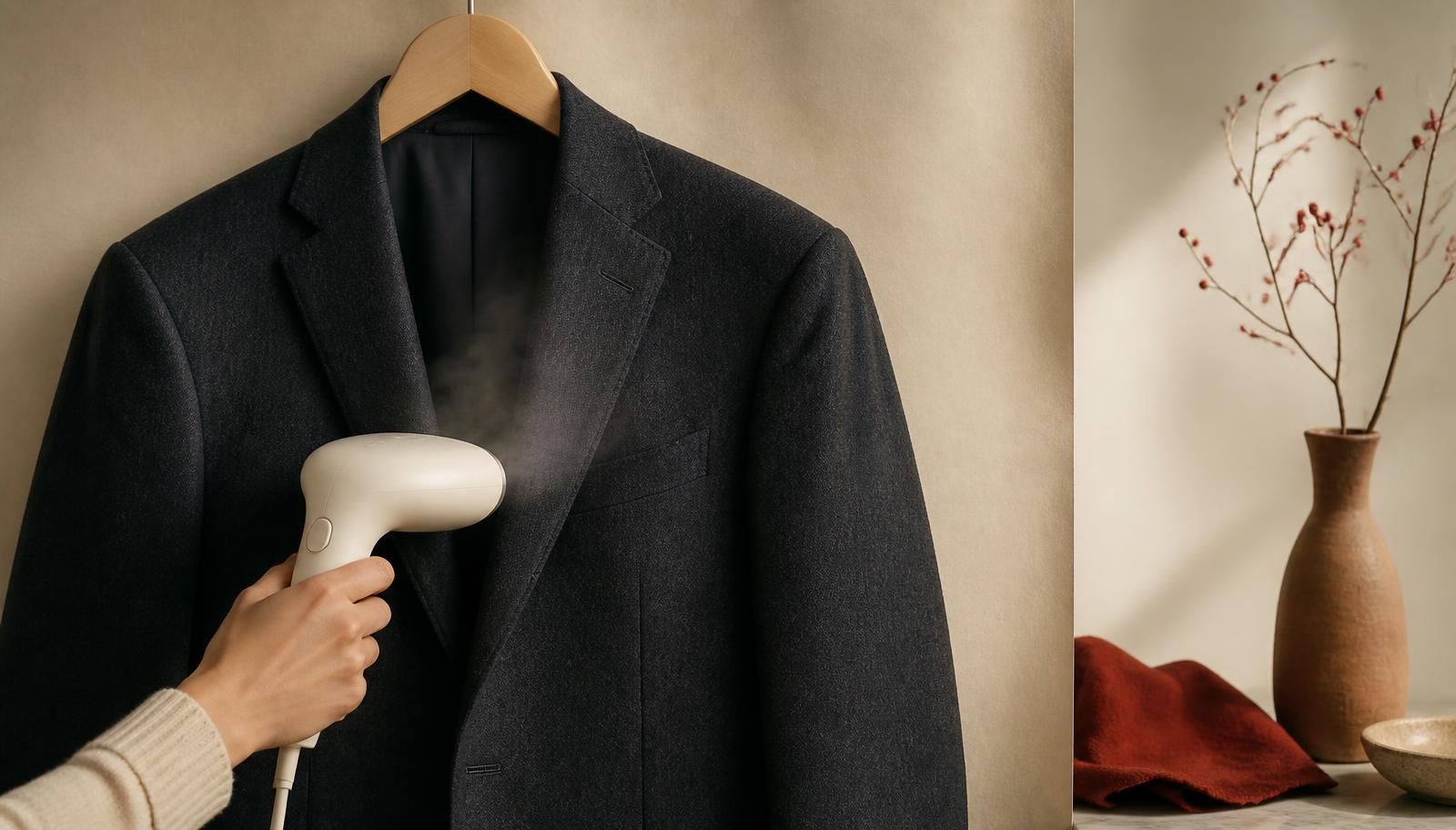
Technique: Hang the jacket on a sturdy hanger. Steam in vertical passes from top to bottom, keeping the head a short distance off the fabric and letting the weight of the jacket pull wrinkles out.
Avoid: Pressing the steamer head hard against the cloth. Pressure plus steam can mark wool.
A suit can arrive at a hotel looking as though it spent the flight folded into a much smaller suitcase. The jacket may have wrinkles across the body, sleeves, lapels, and lower back. The trousers may need attention too. A travel steamer can help, but a suit jacket is not simply a large shirt.
A tailored jacket contains a face cloth, lining, interlining, shoulder padding, pockets, seams, and a shaped lapel roll. Heat and moisture can affect those parts differently. The right steamer is the one that gives you control and matches the garment label, the appliance manual, your destination voltage, and the finish you need.
Compare all of our recommended travel steamers
What is the best travel steamer for a suit?
The best travel steamer for a suit is the model that matches the garment label, travel voltage, packed size, and the kind of finish you need. For a jacket refresh, look for controlled moving steam, stable vertical use, a head that is easy to guide around lapels and shoulders, and enough water for the session. For trousers that need a sharp crease, consider a 2-in-1 device or travel iron because steam alone may relax wrinkles without reproducing a pressed line.
Steaming is mainly a between-wear and travel-wrinkle treatment. It is not stain removal, dry cleaning, or a guarantee that every crease will disappear. The care label and exact appliance manual control.
Quick picks
| Product or role | Best for | What to verify |
|---|---|---|
| Rowenta Origin DR1050U1 | International suit refreshes | Current voltage, frequency, angle instructions, water guidance, and accessories |
| Epicka global travel steamer | A rotatable-head travel format | Current weight, wattage, tank capacity, and exact listing details |
| NORI Press | Travelers who need pressing as well as steam | Whether its press format fits the jacket, trouser finish, and luggage |
| BEAUTURAL Foldable 120V | Domestic travel and compact storage | Exact model, 120V limitation, and suit-use instructions |
| Steamfast NOMAD | Compact conventional steaming | Current ASIN, price, availability, and suit-specific evidence |
Product links should appear after the reader understands the role and limitations of each model. Check current Amazon prices and availability at the time of publication.
Can you use a travel steamer on a suit?
Often, a travel steamer can release light wrinkles from a suit jacket or trousers when the care label and appliance manual permit it. Use restrained, moving steam rather than saturating the garment. Keep the steam head away from skin, room surfaces, and structured areas that should not be flattened.
A suit contains more than the outer fabric. The lining, interlining, canvas or adhesive, shoulder padding, pocket construction, lapel roll, and seams can all respond to heat and moisture. Rowenta's suit guide describes a jacket as a constructed garment and recommends care around the shoulders, lapels, and other shaped areas.
SuitSupply also recommends following the garment label and treating steaming as between-wear maintenance. It cautions against ironing a suit unless the care label specifically permits it. Wuyue Bespoke similarly recommends light steam for wrinkles, followed by full drying, while warning against saturation and heavy pressure around structured areas.
What makes a good travel steamer for suits?
Generic claims such as “powerful steam” do not tell you much about suit use. These are the criteria that matter more.
Controlled steam
The head should let you make short, moving passes. That matters around lapels, shoulders, seams, and pocket edges. A model that floods one area quickly may be harder to control on a tailored jacket.
Stable vertical use
A jacket is easiest to handle on a sturdy, broad hanger. Prioritize a model whose manual clearly explains its operating position and water behavior. Do not infer safe angle use from the shape of the appliance.
Head access
The user needs to reach body panels, sleeves, lapels, and areas near seams without pressing into padding or trim. A rotatable head may help with access, but it does not make every angle safe.
Water handling
A useful tank should support the planned session without encouraging overfilling. Record tank capacity only when the exact model source confirms it. Water type, fill level, and cleaning instructions belong to the manual.
Voltage and frequency
International travelers need an exact input range, frequency, and suitable plug adapter. A product marketed for travel is not automatically dual voltage. A plug adapter changes the plug shape, not the voltage.
Read our travel-steamer wattage and voltage guide and the best dual-voltage travel steamers before an international trip.
Packed weight and protection
Compare the complete kit, including the appliance, cord, case, water container, and adapter. Protect the steam head in your suitcase and empty the tank before transit.
The best travel steamers for suits, by use case
Best established-brand option for international travel: Rowenta Origin DR1050U1
Rowenta's official product page documents the Origin DR1050U1 as a 120V-240V model with 1100W. That makes it a useful candidate for travelers who need to check international electrical compatibility before they leave.
For a suit jacket, the important question is not only voltage. You also need to confirm the model's current operating-angle instructions, water guidance, included accessories, and the distance recommended by the manual. Use moving passes on the jacket body and sleeves. Around lapels and shoulders, use shorter passes and avoid pressing into the structure.
This is the strongest candidate in the group for an established-brand and documented-voltage role. The model still needs a current listing check before publication.
Check the current Rowenta Origin price and model details on Amazon.
Best global-format option with a rotatable head: Epicka global travel steamer
Epicka documents a 90-degree rotatable head, two modes, worldwide-voltage positioning, and a 15-second heat-up for its global travel steamer. A rotatable head may make it easier to approach a jacket from different positions, especially when working around sleeves and body panels.
The official page reviewed did not publish wattage, weight, or tank capacity. Do not fill those fields from a different Epicka model or an Amazon variant. Treat the product as a candidate for readers who value a global travel format, then ask them to verify the current listing and manual.
For suit use, keep the head moving and follow the manual's angle and water instructions. “Rotatable head” does not mean the appliance can operate safely in every position.
See the current Epicka listing on Amazon.
Best 2-in-1 example for jacket touch-ups and occasional pressing: NORI Press
NORI documents the Press at 1.4 lb with six fabric-specific heat settings, an 8-foot cord, and 120/220V at 60Hz. Its flat press format may appeal to travelers who want to steam hanging garments but also need more direct control for a trouser crease or crisp detail.
The trade-off is format. NORI Press is a press and steam iron, not a conventional handheld steamer. Direct contact and heat need to match the garment label and jacket construction. A press can help with some structured areas, but it can also create shine or distortion when the setting or technique is wrong.
Compare the NORI Press on Amazon.
Best compact domestic option: BEAUTURAL Foldable 120V model
The BEAUTURAL Foldable model is a domestic-voltage candidate for travelers who are staying within a compatible 120V supply. BEAUTURAL's official store identifies the model as 120V only and warns against connecting it to 220V, even with a plug adapter.
That limitation matters more than its compact shape. A plug adapter cannot make a 120V-only steamer safe on a 220V or 240V supply. Use this model only when the destination power matches the exact appliance label and the garment and manual permit steaming.
Confirm the current model number, tank details, operating position, and accessories before assigning a permanent editorial award.
Check the current BEAUTURAL model and price on Amazon.
Compact conventional option: Steamfast NOMAD
The Steamfast NOMAD fits the conventional handheld travel-steamer category. It is best considered for vertical jacket refreshing rather than for creating pressed trouser creases.
Before publication, verify the current Amazon ASIN, price, availability, warranty, and exact model specifications. Do not import dimensions, runtime, weight, or voltage information from another Steamfast product. Use a product card with an evidence status such as “Manufacturer confirmed,” “Amazon listing,” or “Verify in manual.”
See whether the Steamfast NOMAD is currently available on Amazon.
Products that should not receive a “best” label yet
Newer marketplace listings and variants from OGHom, Jack & Rose, and other brands may look attractive on price or feature count. Incomplete manufacturer documentation, model changes, and conflicting Amazon details make them poor choices for a confident suit-specific ranking until the exact product can be verified.
A transparent reserve list is more useful than a long ranking built from mixed models. Readers should know when a product has not earned a strong editorial label.
How to steam a suit jacket without damaging its shape
Use the following as general guidance. The garment label and appliance manual take priority.
Before steaming
- Read the sewn-in care label.
- Check for stains or visible damage. Steam is not a stain treatment.
- Brush away surface dust with a suitable clothes brush.
- Empty the pockets. If the construction allows it, pull pocket linings out slightly so they are not folded against the face fabric.
- Place the jacket on a sturdy, broad hanger.
- Set up in a dry area with room around the garment.
- Confirm the hotel supply and appliance voltage if you are traveling internationally.
Jacket technique by area
| Jacket area | Technique | Avoid |
|---|---|---|
| Body panels | Use slow, moving passes and hold the fabric lightly taut | Saturating one panel or rubbing the head against the cloth |
| Lapels | Work carefully along the roll and follow the manual’s distance | Flattening the roll with pressure |
| Shoulders | Use short passes from suitable angles and avoid the padding | Pressing directly into the shoulder structure |
| Sleeves | Let the sleeve hang freely and work in sections | Pulling the sleeve into a distorted shape |
| Pockets and seams | Use restrained steam and observe the construction | Holding steam over folded pocket linings or seams |
Start with the larger body panels. Then work toward the areas that need more control. Keep the head moving rather than holding it in one place. If the fabric becomes wet, the appliance spits, or the jacket changes shape, stop and check the manual.
Let the jacket dry fully
After steaming, leave the jacket on its hanger with air around it. Do not put a damp jacket directly into a garment bag or suitcase. Cloth, lining, humidity, and steam output differ, so a fixed drying time is not appropriate for every situation.
If the jacket remains badly wrinkled, develops rippling, or loses its shape, stop adding heat and moisture. A cleaner or tailor may be the better next step.
How to steam suit trousers
Steaming can relax general wrinkles in trousers, but it may not create a sharp pressed crease. Hang the trousers from a suitable hanger, work from the waistband downward, and hold the cloth in position only as the manual and care label permit.
If the crease is central to the outfit, a travel iron or 2-in-1 press may be a better fit. Read travel steamer vs. iron before deciding.
Do not press a heated plate against trousers simply because the device has an iron mode. Check the fabric label and the model instructions first.
Suit fabrics and construction that need extra care
Wool and wool blends
Wool may respond well to restrained steam, but the wool percentage does not tell you everything about the jacket. The lining, interlining, canvas, adhesive, and shoulder work also matter. Use short moving passes and let the jacket dry fully before wear or storage.
Fused jackets
A fused jacket contains bonded layers. Do not assume it tolerates unlimited heat or moisture. Use short passes, follow the label and manual, and stop if bubbling, rippling, or distortion appears.
Tweed and textured weaves
Keep the head at the model's recommended distance. Avoid direct contact that could flatten the surface texture.
Leather, suede, and special trim
Avoid direct steam contact with leather or suede details. When a jacket contains unusual trim, ask a professional before treating it.
Lining and shoulder padding
Use extra restraint around lining and padding. Do not soak the lining or press into the shoulder structure. A jacket should not be treated like a flat shirt.
When a steamer is not the right tool for a suit
A steamer has clear limits:
- It is not a stain remover.
- It is not a substitute for professional cleaning when the label or garment condition requires it.
- It may not create sharp trouser creases.
- A damaged, soaked, or distorted jacket may need a tailor or cleaner.
- A garment with leather, suede, delicate trim, or unclear instructions needs extra caution.
SuitSupply recommends following the care label and treating steaming as between-wear maintenance rather than ironing a suit freely.
Voltage, hotel setup, and airport packing
Before using the steamer in a hotel, check the hotel's supply against the exact appliance input label. Use a suitable plug adapter when needed, but remember that an adapter changes plug shape, not voltage.
Set up in a dry area rather than a bathroom by default. Keep the cord away from walking paths and water. When finished, unplug the appliance, let it cool, empty the tank, and protect the head before packing it.
Read these related guides:
- Travel-steamer wattage and voltage
- Best dual-voltage travel steamers
- How to use a travel steamer in a hotel
- Can you bring a steamer on a plane?
Suit-steaming packing checklist
- Suit on a supportive hanger or packed in a proper garment bag.
- Travel steamer with its current manual.
- Suitable plug adapter for the destination.
- Voltage and frequency checked for the exact model.
- Clean clothes brush.
- Protective case or sleeve for the steam head.
- Empty tank before transit.
- Time at the destination for the suit to hang and dry.
- Backup plan for a hotel iron, press service, cleaner, or tailor when a sharper finish is required.
Frequently asked questions
Can you steam a suit jacket?
Often, a steamer can help release light wrinkles from a jacket when the care label and appliance manual permit it. Use restrained moving steam, avoid direct pressure on shoulders and lapels, and let the jacket dry fully.
Is steaming safer than ironing a suit?
It can reduce the direct-contact risk associated with a hot soleplate, but it is not automatically safe for every suit. Steam, heat, water, internal construction, and incorrect technique can still cause damage.
What is the best steamer for a wool suit?
The best model depends on the exact care label, construction, travel voltage, packed size, and how much control the device gives you. Do not rank a product for wool solely because its marketing uses the word “wool.”
Can a steamer create a trouser crease?
Steam can relax wrinkles and may help when fabric is held in position, but a steamer may not create the same sharp crease as an iron. Choose a 2-in-1 or travel iron when a pressed line matters.
Should I steam lapels and shoulders?
You may be able to use short, careful passes if the label and manual permit it. Avoid pressing the steamer into the lapel roll or shoulder padding, and stop if the shape changes.
Can I steam a lined suit jacket?
A lined jacket needs care because the face cloth, lining, and internal structure may respond differently. Follow the label and manual, use restrained steam, and allow the jacket to dry completely.
Can I use a travel steamer on a dry-clean-only suit?
A dry-clean-only label does not automatically answer whether every form of steaming is appropriate. Check the full care instructions and ask a cleaner or tailor when the construction, fabric, or trim is unclear.
Is a dual-voltage steamer better for suits?
Dual voltage helps with international electrical compatibility. It does not by itself make a steamer better for suit care. You still need suitable steam control, operating position, water handling, and garment compatibility.
Final recommendation
For a suit jacket, prioritize control and careful vertical use over the biggest marketing number. For international travel, verify voltage and frequency before buying. For trousers that need a sharp crease, consider a press or 2-in-1 device. Whatever you choose, read the garment label, keep the steam moving, avoid pressing into structured areas, and let the suit dry before wearing or packing it.
Compare the best travel steamers
References
Keep reading
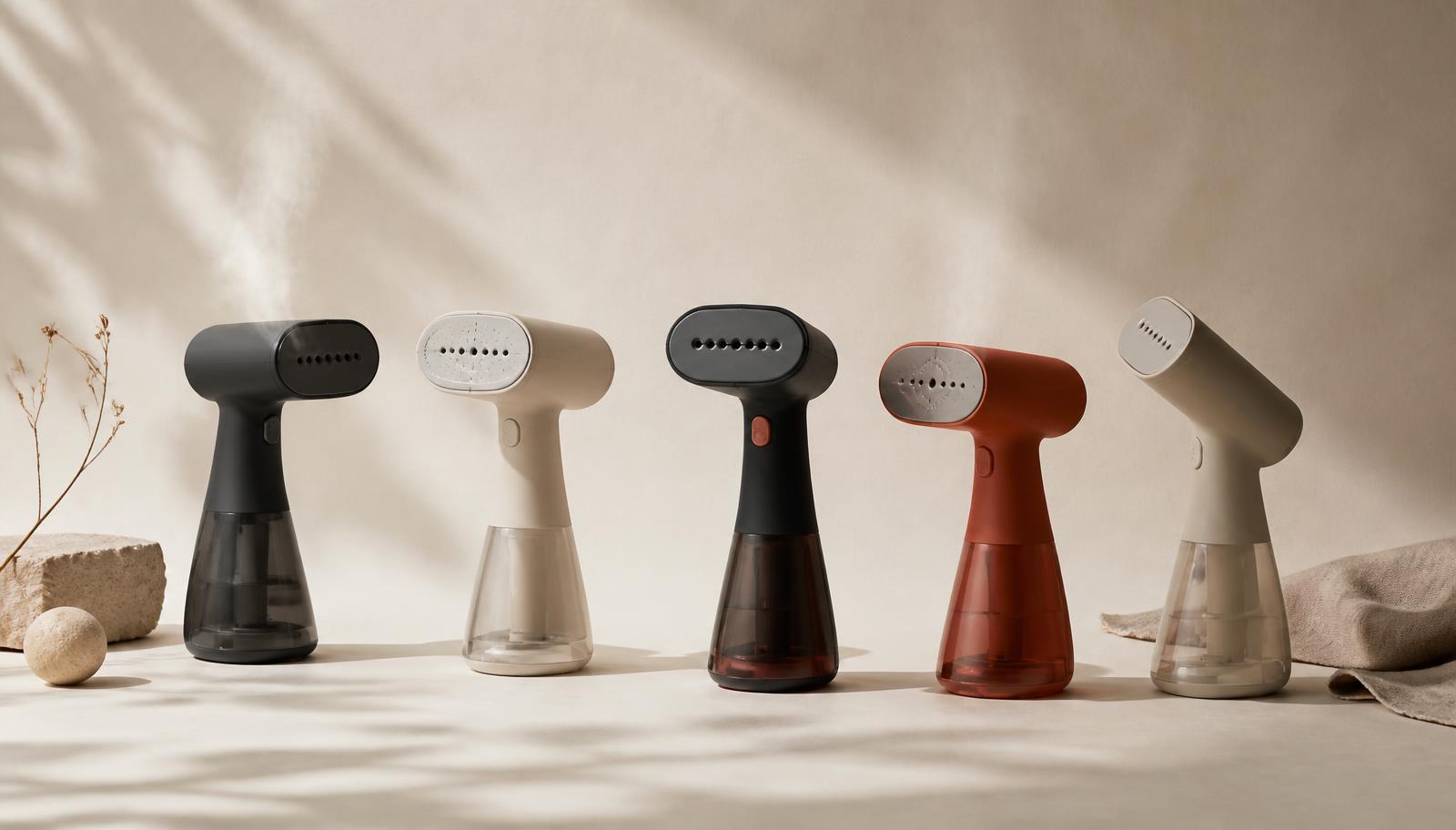
Dual-voltage steamers
Compare the best dual-voltage travel steamers for overseas trips. See voltage ranges, plug-adapter needs, heat-up times, weight, tank size, and safety caveats.
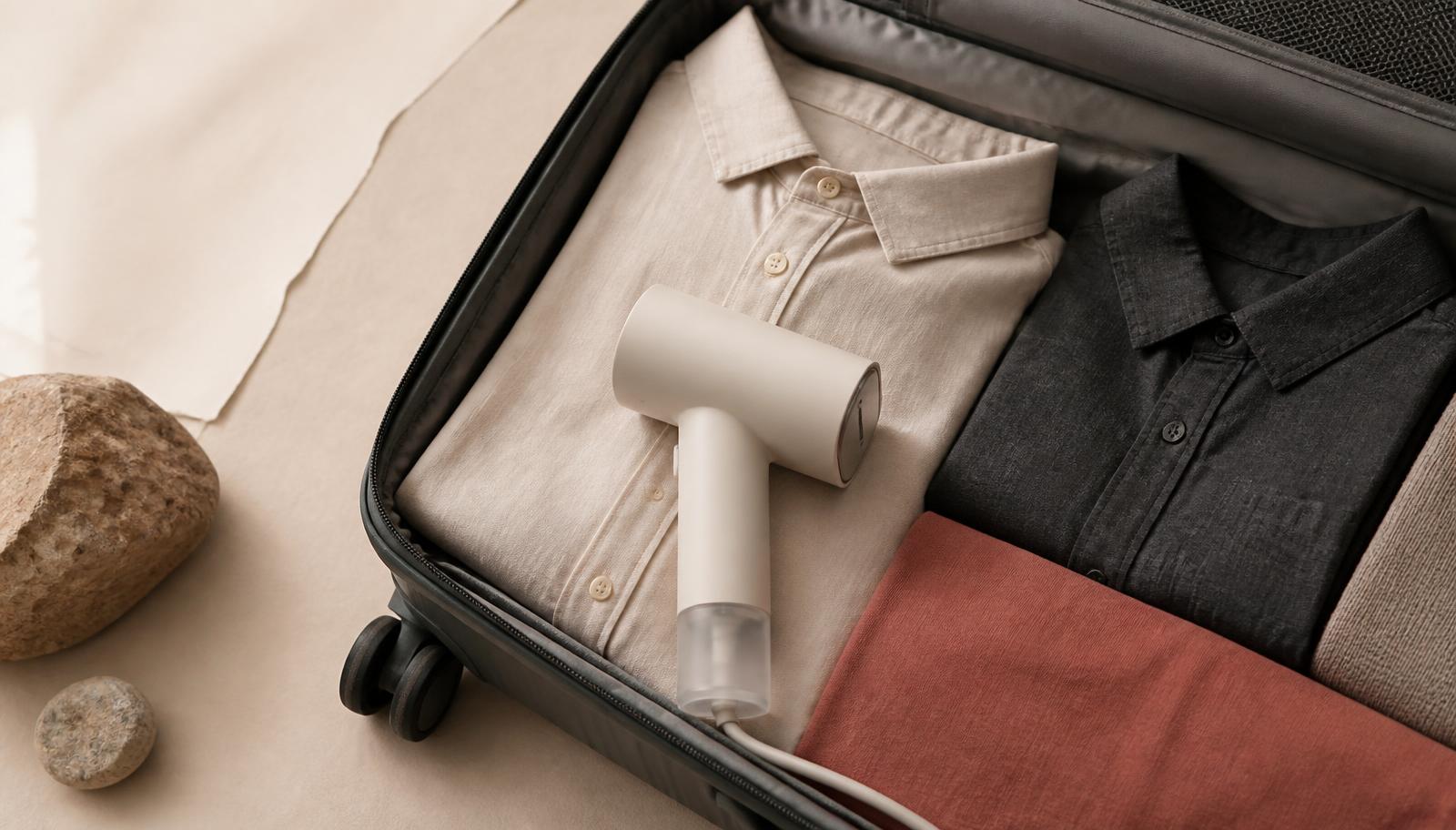
Portable steamers
Compare portable travel steamers by packed size, weight, foldability, cord, case, heat-up time, and hotel-room usability. See domestic and international caveats.
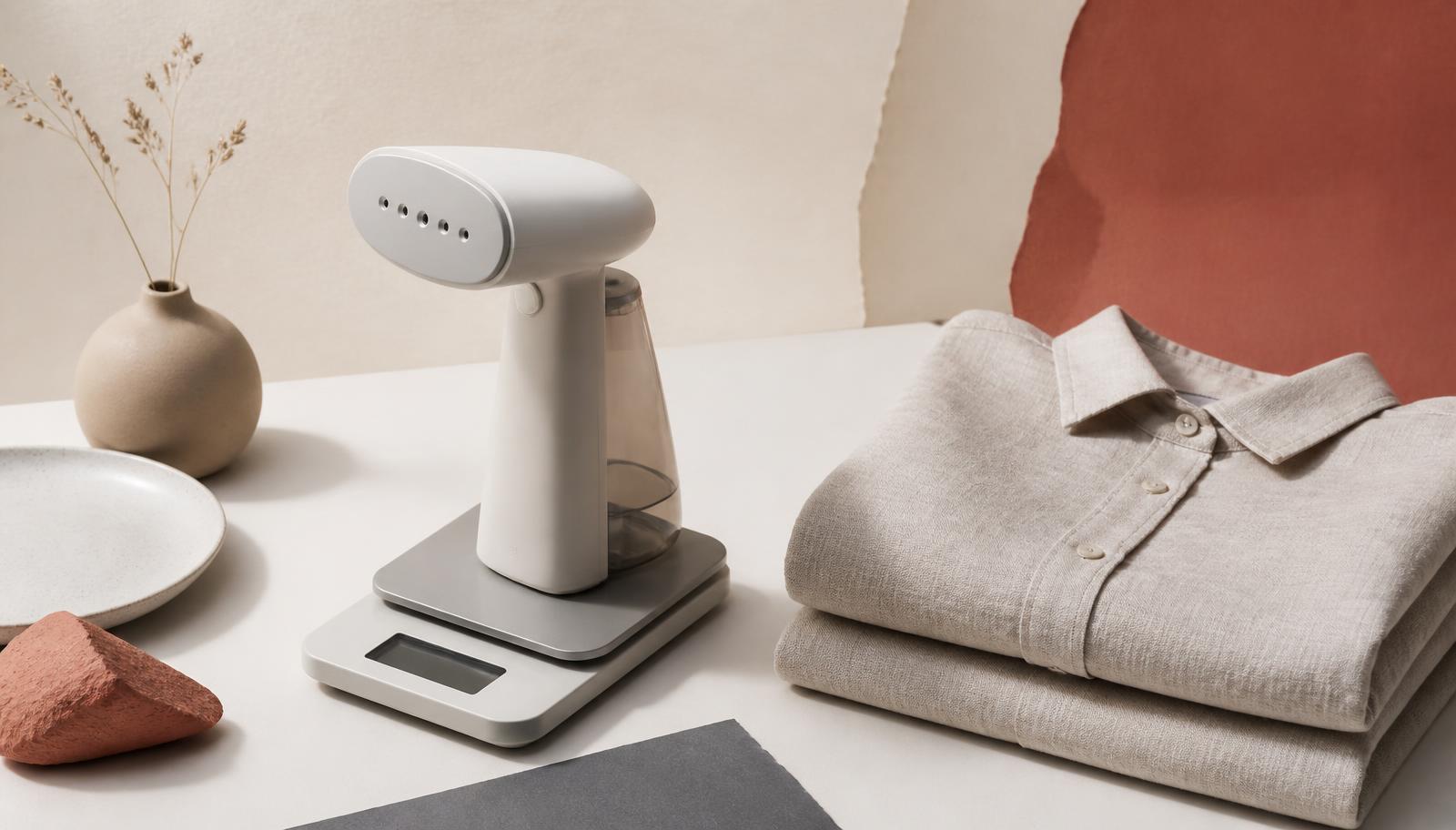
Lightweight steamers
Compare lightweight travel steamers by listed weight, packed dimensions, foldability, tank trade-offs, heat-up time, and voltage. Find a low-weight pick for your next trip.
How to choose
Learn how to choose a travel steamer by voltage, weight, packed size, tank, runtime, format, fabrics, safety, and budget. Use this practical checklist.