How-to · Hotel rooms
How to Use a Travel Steamer in a Hotel Room Safely
Learn how to use a travel steamer in a hotel room, including setup, voltage, water, garment technique, safety, troubleshooting, cooling, and packing.
We may earn an Amazon commission from links on this page, at no extra cost to you. How this works.
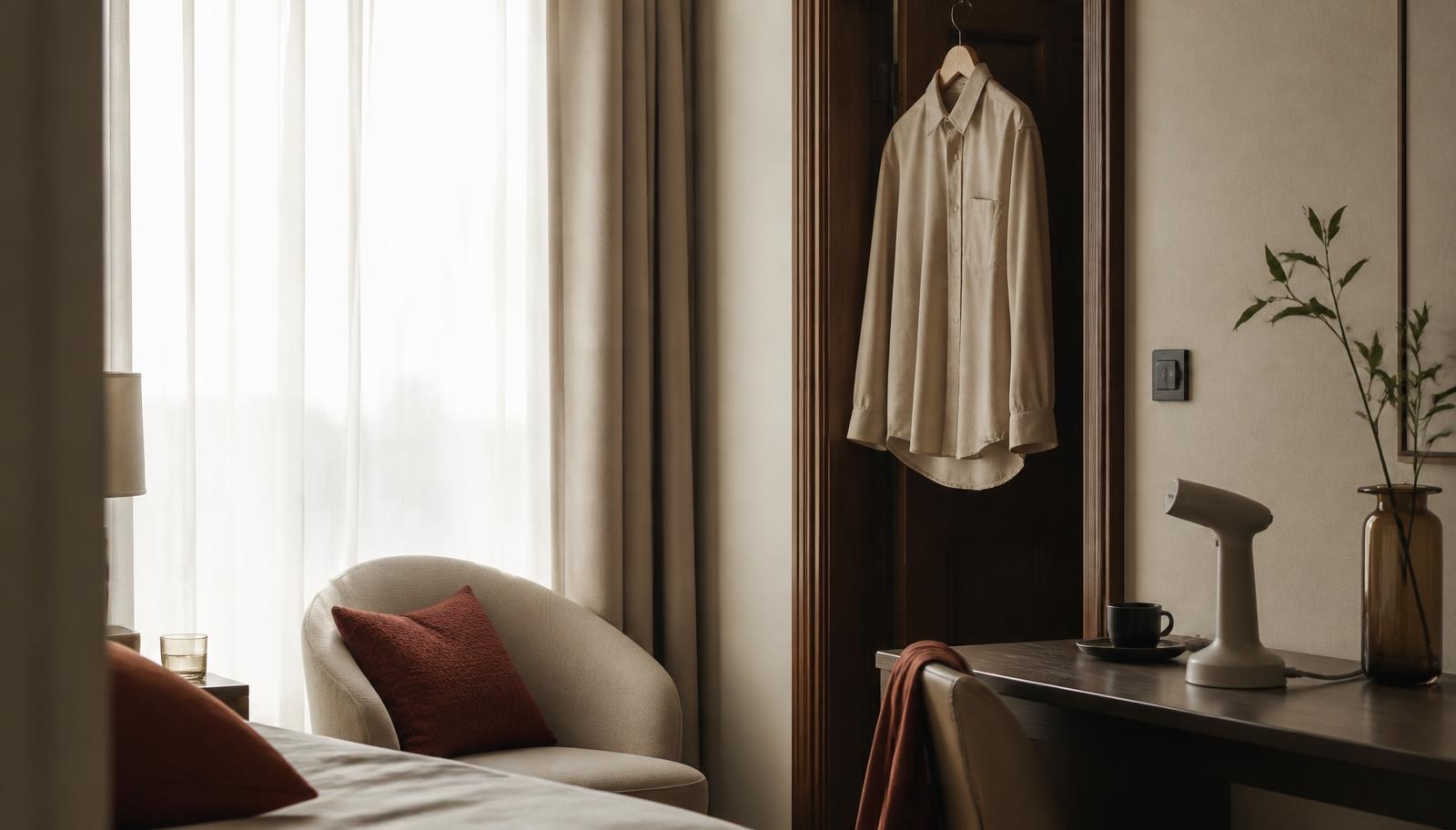
Checklist
Hotel steaming checklist
0 of 14 complete
A travel steamer can rescue a shirt that spent the day folded in a suitcase. In a hotel room, though, the setup deserves a little thought. You may have one useful outlet, a small desk, a garment that cannot tolerate much heat, and a bathroom that looks like the most convenient place to add water.
The safest routine is simple: choose a dry, stable setup, check the hotel supply against the steamer's input label, fill the tank according to the manual, hang the garment, steam in controlled passes, then unplug, cool, empty, dry, and pack the appliance. The exact manual controls the water type, operating angle, fabric settings, and safe distance.
See portable travel steamers for hotel use
Quick hotel-room setup checklist
| Before steaming | Confirm |
|---|---|
| Location | A dry, stable surface with room around the appliance |
| Outlet | The hotel supply matches the steamer's voltage; use only a suitable adapter when needed |
| Garment | The care label permits the planned steam or heat setting |
| Water | The manual specifies the water type and fill level |
| Hanging point | The garment can hang without touching a hot surface |
| Appliance | The cord, plug, tank, cap, and steam head show no damage |
Safety reminder: Do not use a mains-powered steamer in a bathroom or touch electrical equipment with wet hands. Electrical Safety First gives this advice for travelers using electrical products abroad.
How do you use a travel steamer in a hotel?
Set up the steamer on a dry, stable surface near a suitable outlet, away from sinks, tubs, showers, wet towels, and loose fabric. Check the model's voltage against the hotel supply before plugging it in. Fill the tank according to the manual, hang the garment, and let the steamer reach operating temperature. Move the steam head slowly over one section at a time, keeping the hot head or plate away from skin and room surfaces. Follow the garment-care label, unplug the appliance when finished, and empty the tank before packing it.
Set up a safe steaming area in the hotel room
Choose the location before you add water. A desk or table in the main room is usually easier to control than a bathroom counter. You want a dry surface, a reachable outlet, enough space for the cord, and a place where the garment can hang without brushing against a lamp, heater, curtain, or bed.
Keep the steamer away from the sink, shower, bathtub, wet towels, and any spilled water. Leave enough room to move around the garment without striking furniture or another person. Keep the cord out of a walkway and away from the steam head or any hot surface.
Electrical Safety First advises travelers not to use mains-powered electrical appliances in a bathroom or touch electrical equipment with wet hands. It also recommends checking cables and sockets for cuts, damage, discoloration, burning smells, buzzing, crackling, or other signs of trouble.
Can you use a travel steamer in a hotel bathroom?
Do not use a mains-powered travel steamer in a hotel bathroom as your default setup. Bathrooms contain water and wet surfaces, and some bathroom outlets are designed for limited purposes. An outlet marked for shavers is not automatically suitable for a high-wattage steamer.
Use a dry area outside the bathroom. If the room has no suitable location, ask hotel staff where guests may use a personal heating appliance. Follow the property's rules even if the steamer itself appears small.
Check voltage before plugging in
If you are traveling internationally, check the hotel's supply before you connect the steamer. You need to know the local voltage and frequency, the plug shape, and the appliance's exact input rating.
| Check | Why it matters |
|---|---|
| Hotel supply voltage | A 120V-only device should not receive 220V or 240V power |
| Frequency | The model may specify 50Hz, 60Hz, or both |
| Plug shape | A suitable plug adapter may be required |
| Appliance label | The exact model may be single voltage or dual voltage |
| Adapter rating | The accessory must support the appliance's electrical demand |
A plug adapter changes the shape of the connection. It does not change voltage. A dual-voltage steamer still needs a plug adapter when its plug does not match the hotel socket.
For the electrical details, read our guide to travel-steamer wattage and voltage. For international product selection, see the best dual-voltage travel steamers.
Rowenta's official page documents the Origin DR1050U1 as a 120V-240V dual-voltage model. BEAUTURAL's official store identifies its foldable model as 120V only and warns against connecting it to 220V, even with an adapter. Do not transfer electrical details from one model to another.
Fill the tank correctly
Water handling varies by steamer, so use the model's manual as the source of truth. In general, fill the tank before the appliance is connected to power, unless the manual gives a different instruction.
Remove the tank if the design allows it. Use the water type specified in the manual and stay below the fill line. Close the cap firmly without forcing it. Wipe away any spill before connecting the appliance, and keep the tank upright unless the model is designed to work in another position.
How much water should you add?
Add enough water for the session without going above the fill line. A full tank does not guarantee a particular runtime because tank size and steam delivery vary by model. If you are preparing one shirt, you may not need the maximum fill.
Do not assume that tap water, distilled water, or filtered water is correct for every steamer. Follow the manual. Empty the remaining water before the appliance goes into your luggage.
Prepare the garment before steaming
Read the garment-care label first. If the label warns against steam or heat, do not use the steamer on that item. Hang the garment so the fabric can fall naturally, and use a sturdy hanger that will not slide while you work.
Buttons and zippers can help keep a shirt or jacket stable. Give the item enough space behind it so steam can move through the fabric without pushing it against a wall, curtain, or another surface.
| Garment | Hotel-room approach |
|---|---|
| Shirt or blouse | Hang it with space behind the fabric and work section by section |
| Dress | Support the hanger and keep nearby surfaces away from steam and drips |
| Jacket or suit coat | Steam larger panels with controlled passes and let the fabric settle |
| Trousers | Use a press or heated plate only if the model and care label permit it |
| Delicate fabric | Use the lowest suitable setting and follow the label and manual |
A steamer is not automatically suitable for every fabric. Test an inconspicuous area only when the garment label and appliance instructions support that approach.
Steam the garment step by step
Start with the model's operating instructions. Some steamers work only in a particular position. Others allow angled or horizontal use. A 2-in-1 model may include a plate intended for direct contact, but that does not mean every fabric can tolerate it.
Use this general technique:
- Turn the appliance on according to the manual.
- Wait for the ready signal or stated heat-up time.
- Hold the garment taut with your free hand well away from the steam path.
- Keep the steam head at the distance recommended by the manual.
- Move slowly over one section instead of holding steam in one spot.
- Work from the lower part of the garment upward when that suits the fabric and model.
- Give collars, cuffs, seams, and hems separate attention.
- Pause if water spits, the fabric becomes wet, or the appliance changes sound.
- Let the garment hang briefly before wearing or packing it.
Do not press the steam head against fabric unless the model is designed for contact. A short heat-up time does not prove that the steamer will remove every crease. Thick fabric, set-in wrinkles, lining, and garment construction all affect the result.
How to steam a suit or jacket in a hotel
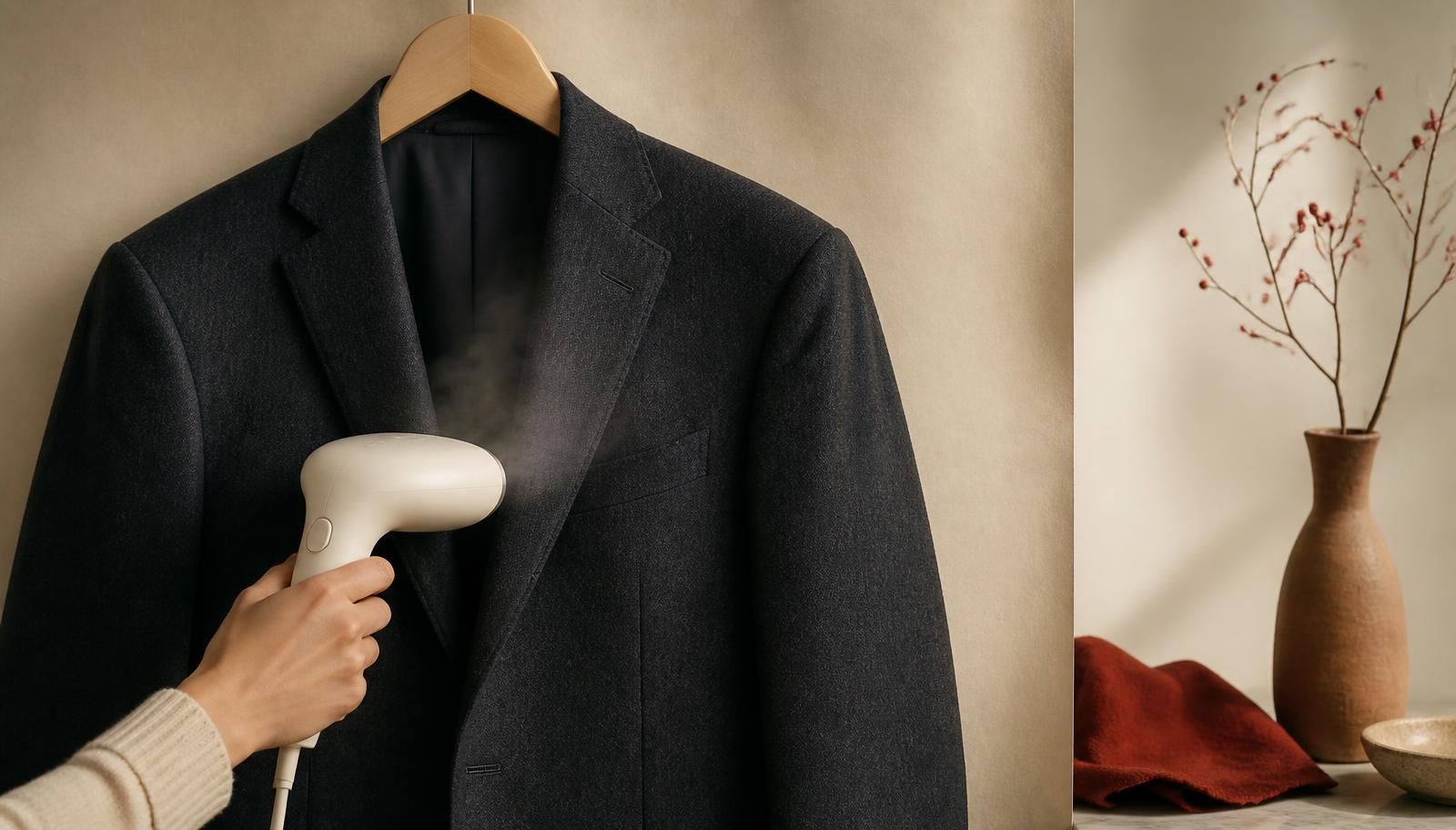
Hang the jacket securely and give yourself room to move around it. Work across the larger panels in sections, then pay attention to sleeves, lapels, seams, and the lower back. Keep the steam head moving and use the distance specified by the manual.
Avoid pressing a heated plate against the jacket unless the garment label and model instructions permit direct contact. Leave the jacket hanging for a short time before putting it on so the fabric can settle.
Use the correct position for the steamer
Travel steamers are not interchangeable. Some are designed for vertical steaming. Some can operate at an angle. Some 2-in-1 models can press on a flat surface.
| Device instruction | What to do |
|---|---|
| Vertical use | Hang the garment and keep the head in the position described by the manual |
| Any-angle use | Follow the manufacturer's angle and water-handling instructions |
| Horizontal use | Use a dry, stable surface and protect it from heat and moisture |
| Press or iron mode | Follow direct-contact settings, fabric limits, and plate instructions |
Do not infer safe use from the shape of the device. Rowenta documents its Origin as a travel model, while Epicka documents a 90-degree rotatable head and two modes for its global travel steamer. Those details apply to the named models, not to every product with a similar shape.
Protect the hotel room and yourself
Steam and hot plates can damage surfaces as easily as they can smooth fabric. Keep the steam head away from skin, curtains, bedding, painted walls, wood, electronics, and plastic. Do not place a hot appliance on a bed, carpet, towel, or unstable table. Use the resting position described by the manual.
Do not leave the steamer unattended. Keep children and pets away from the setup. Stop and unplug the unit if you notice a burning smell, visible cord damage, buzzing, crackling, repeated outlet trips, water near the electrical connection, or any sign of overheating.
Electrical Safety First recommends checking cables and sockets for damage and stopping when you notice burning smells, arcing sounds, or blown fuses.
What to do when the steamer spits or drips
Water from the steam head can result from overfilling, an incorrect operating angle, condensation, a cold head, or a model-specific problem. Stop and check the manual before trying again.
| Problem | Safe first step |
|---|---|
| Water spits from the head | Stop, unplug if needed, let the unit cool, and check the fill line and position |
| Fabric gets wet | Check the manual, then adjust the distance or position only if the instructions allow it |
| Steam is weak | Confirm that heat-up is complete, water is present, and the head is not blocked according to the manual |
| Tank leaks | Stop using the appliance and inspect the seal and tank for damage |
| Outlet trips | Unplug the steamer and do not keep resetting the outlet; ask hotel staff to check it |
Do not keep operating a leaking or electrically damaged unit. Do not diagnose a hotel outlet from one symptom or repeatedly reset a tripped circuit.
Empty, cool, and pack the steamer
The last step protects your next garment and your luggage.
- Turn the appliance off and unplug it.
- Place it in the safe cooling position described by the manual.
- Wait until the steam head or plate is cool.
- Empty the tank over a sink.
- Let removable parts dry as the manual directs.
- Coil the cord loosely.
- Protect the steam head or plate with the supplied case or a suitable sleeve.
- Pack the appliance where it will not be crushed.
Never pack the steamer while it is hot or with water in the tank. For airport-specific questions, read can you bring a steamer on a plane?.
Hotel-room troubleshooting
The hotel outlet is far from the wardrobe
Do not stretch the cord across a walking path. Move the setup to a safer dry area, ask the front desk for a suitable location, or use another room outlet that supports the appliance. Do not assume that any extension cord or power strip is rated for a heating appliance.
The outlet does not work
Check whether the room has a basic switch that controls the outlet, then contact hotel staff. Do not open the outlet, use a damaged socket, or keep resetting a tripped circuit.
The steamer does not produce steam
Check the water level, heat-up time, operating position, and blockage instructions in the manual. If the unit smells hot or makes an unusual sound, unplug it and stop.
The room has only a bathroom outlet
Do not use the bathroom outlet as the default solution. Ask hotel staff for a dry-room setup and confirm the outlet and appliance voltage.
The hotel has strict appliance rules
Follow the property's policy. Some hotels may restrict personal heating appliances or ask guests to use an in-room iron or another designated facility.
A five-minute hotel steaming routine
Use this routine when you need to get ready without turning the room upside down:
- Read the garment label.
- Check the hotel voltage and appliance input label.
- Find a dry, stable setup away from water.
- Inspect the cord, plug, tank, and steam head.
- Fill below the line using the manual's water guidance.
- Hang the garment securely.
- Heat the appliance according to the instructions.
- Steam in controlled passes.
- Stop if water, heat, smell, sound, or the outlet seems abnormal.
- Unplug, cool, empty, dry, and pack the steamer.
Frequently asked questions
Can I use a travel steamer in a hotel bathroom?
Do not use a mains-powered steamer in a bathroom as a default setup. Electrical Safety First advises against using mains-powered electrical appliances in a bathroom and against touching electrical equipment with wet hands. Use a dry area away from sinks, tubs, showers, and wet towels.
Should I hang clothes while steaming?
Usually, a steam-only travel steamer is designed to work on hanging clothes, but the exact model instructions control. Use a sturdy hanger and keep the garment away from hot surfaces.
Can I use tap water in a hotel?
Follow the appliance manual. Water guidance differs by model and location. Do not exceed the fill line, and empty the tank after use.
How close should I hold the steamer to clothes?
Use the distance in the manual. Avoid holding the steam head against fabric unless the model is designed for contact and the garment label permits it.
Can I steam a suit in a hotel room?
Yes, if the garment label and appliance instructions permit it. Hang the jacket, work in sections, keep steam away from skin and room surfaces, and allow the garment to hang before wearing it.
Why is my travel steamer spitting water?
Possible causes include overfilling, an incorrect operating angle, condensation, or a model-specific issue. Stop and check the manual. If the unit leaks, smells hot, or has a damaged cord, unplug it and stop using it.
Can I use an extension cord with a travel steamer?
Do not assume that every extension cord or power strip is suitable for a heating appliance. Check the appliance wattage, cord or strip rating, and manufacturer instructions. Ask hotel staff when the outlet setup is unclear.
How do I pack a travel steamer after using it?
Unplug it, let it cool fully, empty the tank, dry removable parts as directed, secure the cord loosely, protect the steam head or plate, and place it where it will not be crushed.
Related guides
- Best travel steamers
- Best portable travel steamers
- Best lightweight travel steamers
- Best dual-voltage travel steamers
- How to choose a travel steamer
- Travel steamer wattage and voltage explained
- Can you bring a steamer on a plane?
References
Keep reading
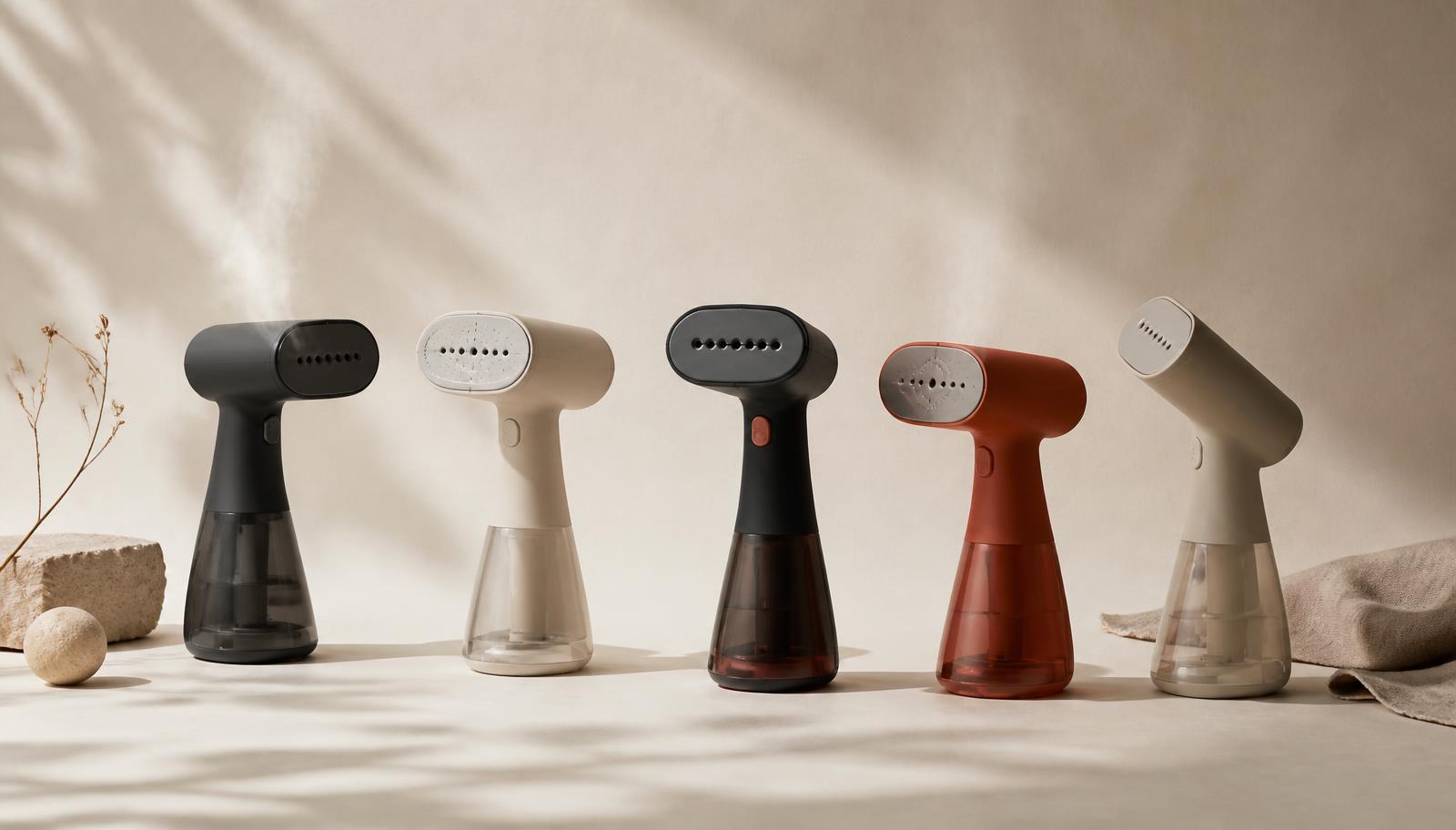
Dual-voltage steamers
Compare the best dual-voltage travel steamers for overseas trips. See voltage ranges, plug-adapter needs, heat-up times, weight, tank size, and safety caveats.
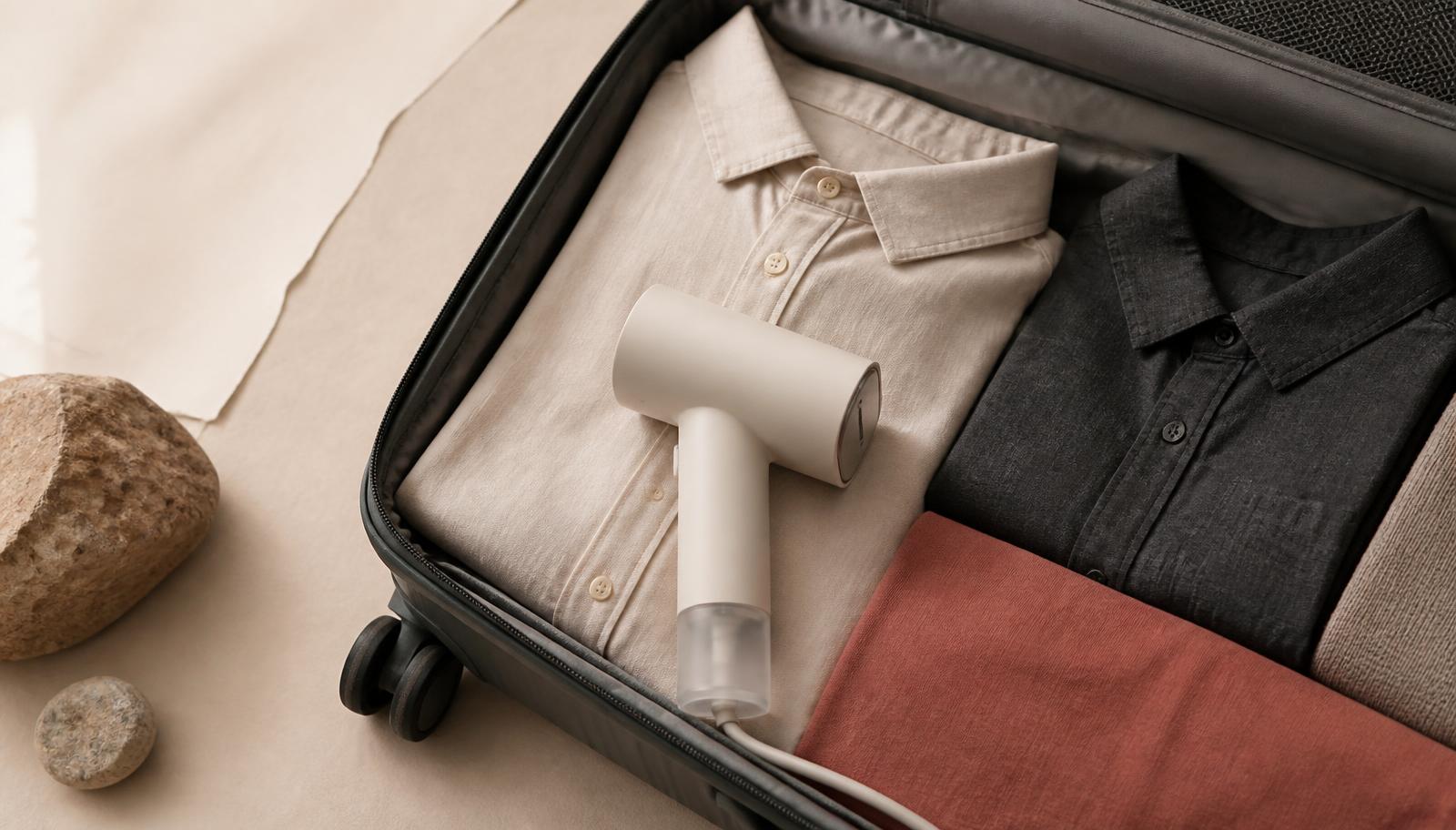
Portable steamers
Compare portable travel steamers by packed size, weight, foldability, cord, case, heat-up time, and hotel-room usability. See domestic and international caveats.
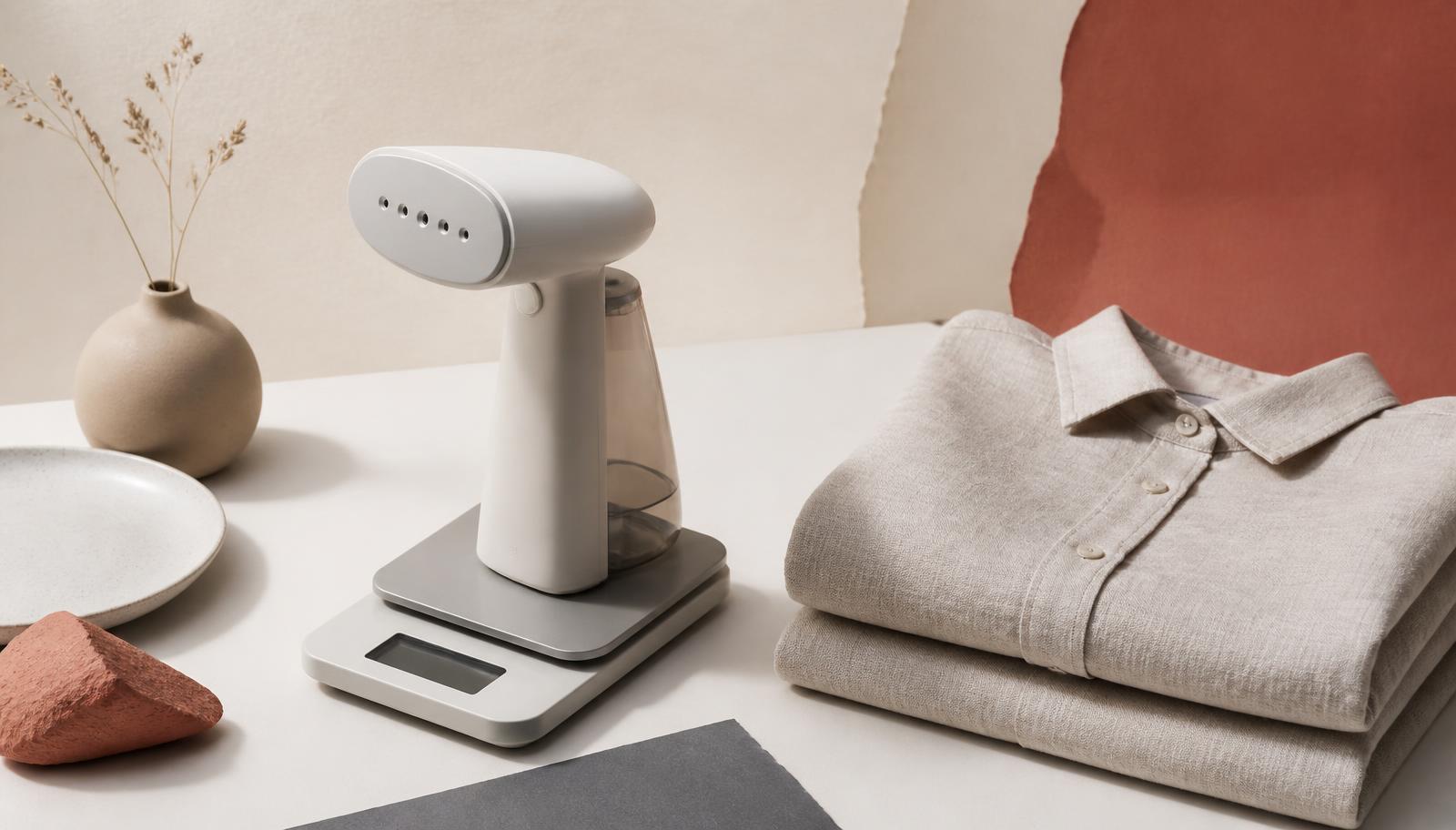
Lightweight steamers
Compare lightweight travel steamers by listed weight, packed dimensions, foldability, tank trade-offs, heat-up time, and voltage. Find a low-weight pick for your next trip.
Steamers for suits
Find the best travel steamers for suits, compare voltage and control, and learn how to steam jacket panels, lapels, shoulders, and trousers safely.