Explainer · How to choose
How to Choose a Travel Steamer: What to Look For Before You Buy
Learn how to choose a travel steamer by voltage, weight, packed size, tank, runtime, format, fabrics, safety, and budget. Use this practical checklist.
We may earn an Amazon commission from links on this page, at no extra cost to you. How this works.
Interactive
Match a steamer to your trip
Six questions, one named candidate worth checking, plus a runner-up.
The short answer
Choose a travel steamer in this order: destination voltage, luggage limits, clothing load, format, fabric needs, and support. Check the exact model’s voltage before buying a plug adapter. Then compare packed weight and dimensions, tank capacity, stated runtime, heat-up time, cord, and return policy. A higher wattage, larger tank, lighter body, or dual-voltage label can each be useful, but none of them answers every travel need.
Compare the best travel steamers on Amazon
Quick decision guide
| If this sounds like you... | Start with... | Then verify... |
|---|---|---|
| I travel internationally | A confirmed dual-voltage model | Voltage, frequency, destination plug, and wattage at the destination voltage |
| I pack one carry-on | A portable or foldable model | Packed dimensions, full-kit weight, and cord storage |
| I count every ounce | A lightweight model | Measurement basis, accessory weight, tank, and packed shape |
| I steam several outfits | A conventional steamer with documented tank/runtime | Capacity, fill process, stated duration, and refill routine |
| I need sharp trouser creases | A press or 2-in-1 model | Heated plate, fabric settings, length, and direct-contact instructions |
| I only need emergency touch-ups | A small, fast-heating model | Heat-up claim, safe resting position, and garment coverage |
| I am buying on a budget | A domestic or value model | Voltage, return policy, warranty, and current seller |
The rest of this guide explains how to make that decision without relying on a product title or star rating alone.
Step 1: Start with your destination voltage
Voltage comes first because an electrically incompatible appliance may be unusable or unsafe. A steamer designed for 120V power is not automatically suitable for a 220V or 240V hotel outlet.
| Term | What it means |
|---|---|
| Voltage | The electrical potential supplied by the outlet |
| Frequency | The cycles per second listed in hertz, such as 50Hz or 60Hz |
| Plug adapter | Changes the plug shape to fit an outlet |
| Voltage converter | Changes electrical voltage, but does not automatically make every appliance suitable |
| Dual voltage | An appliance designed to work across its stated voltage range, with manual selection or automatic switching depending on the model |
Important: A plug adapter changes the plug shape. It does not convert 120V to 220V or 240V. Do not connect a 120V-only steamer to a higher-voltage outlet merely because the plug fits.
Check the appliance label and manual, not only the generic product title. The exact model matters. Rowenta documents the Origin DR1050 for 120V to 240V operation. BEAUTURAL identifies its foldable travel steamer as 120V only and warns against connecting it to 220V power, even with an adapter.
For product recommendations, see the best dual-voltage travel steamers. For a deeper explanation, see travel steamer wattage and voltage explained.
Do you need dual voltage?
A domestic trip within the same voltage system may not require dual voltage. An international trip may, depending on the destination and the appliance’s rating. If the listing is unclear, treat the electrical compatibility as unverified.
Do not assume that a converter is a universal solution. Follow the model’s manual and the manufacturer’s instructions. Check whether the device supports the destination frequency as well as the voltage.
Step 2: Decide how much weight and space you can spare
Travelers often use “portable,” “lightweight,” “small,” and “foldable” as if they mean the same thing. They do not.
| Question | What to compare |
|---|---|
| Is the suitcase near its weight limit? | Appliance-only and full-kit weight |
| Is the carry-on crowded? | Packed dimensions and foldability |
| Is the hotel room small? | Cord length, tank handling, and resting position |
| Do you need a case? | Included pouch or travel bag |
| Will you pack accessories? | Brush, adapter, cup, and cord weight |
The Nesugar G3 Pro is listed at 0.8 lb, the lowest appliance weight in our current shortlist. Its accessory weight and several technical fields still need confirmation. Rowenta’s Origin is heavier at 1.57 lb, but the manufacturer documents its dimensions, foldable design, and travel bag.
That is the trade-off. The lower number can help with a strict luggage limit. Better documentation can make it easier to understand what you are actually packing.
For a weight-first comparison, see the best lightweight travel steamers. For packed shape and hotel use, see the best portable travel steamers.
Compare packed dimensions, not just operating dimensions
A long fixed-shape steamer can be difficult to place in a full suitcase even when it weighs little. Look for dimensions that clearly identify the folded, stored, or operating position. If the source does not say, label the information as listed or unconfirmed.
Step 3: Match tank capacity and runtime to your clothing load
A larger tank can reduce refills, but it can also add weight. A short stated runtime may be fine for one shirt and frustrating when several travelers need to steam multiple outfits.
Before buying, ask:
- How many garments will you steam at one time?
- Can you remove and empty the tank before packing?
- Is there a clear fill line?
- Does the manufacturer state runtime, or is the number only implied by the listing?
- Does the manual specify a type of water?
Steamfast lists the NOMAD with a 5oz removable tank and ten minutes of stated steam duration. Rowenta lists four minutes of steam time per fill for the Origin. Neither figure tells you exactly how many garments you will finish. Fabric, garment size, technique, and pauses all affect use.
Do not publish a tank capacity when the source refers to a different model or when official pages conflict. Use “not published” or “verify” instead of guessing.
Step 4: Choose the right format for your clothing
“Travel steamer” covers more than one type of appliance. Choose the format that matches the finish you want.
| Format | Best suited to | Trade-off |
|---|---|---|
| Steam-only handheld | Shirts, dresses, jackets, and quick de-wrinkling on a hanger | Less useful for making sharp pressed creases |
| 2-in-1 steamer and iron | Travelers who want steam and direct pressing | May be more complex or larger |
| Travel press | Trousers, collars, cuffs, and sharper creases | Can be longer and needs careful direct-contact use |
| Foldable handheld | Luggage storage and hotel touch-ups | Folding does not guarantee low weight or dual voltage |
The NORI Press illustrates the difference. NORI lists a 1.4 lb weight, 14-inch length, six heat settings, and 120V/220V operation at 60Hz. It is a travel press and steam iron, not a conventional hanging garment steamer.
Epicka and Jack & Rose are examples of 2-in-1 formats in the current product research. Treat them as separate categories until the exact model’s voltage and dimensions are confirmed. A press is not automatically better than a steam-only device. It simply solves a different clothing problem.
For a direct comparison, see travel steamer versus travel iron.
Step 5: Consider heat-up time, steam output, and operating position
Heat-up time tells you how soon the appliance may start producing steam. It does not tell you how long it will run or how well it will handle every fabric.
| Specification | What it tells you | What it does not prove |
|---|---|---|
| Heat-up time | When the device may begin producing steam | Long runtime or better garment results |
| Steam output | The manufacturer’s stated steam rate, if available | Results on every fabric |
| Operating angle | Whether the device can steam vertically or at an angle | Safe use in every position |
| Auto shutoff | A safety feature after a stated time or condition | Permission to leave the appliance unattended |
| Heated plate | Direct-contact pressing capability | Suitability for every garment |
Rowenta documents a 25-second heat-up and up to 20g per minute of steam output. Epicka documents a 15-second heat-up, two modes, a 90-degree head, and a 15-minute auto-off.
Use those figures as manufacturer claims. Do not turn a short heat-up time into a promise that a steamer removes wrinkles faster or better than every competitor.
Follow the garment-care label. Keep heated plates and steam heads away from materials that may melt or scorch.
Step 6: Match the steamer to your fabrics
The right choice depends on the clothing you pack.
| Garment or fabric need | Look for |
|---|---|
| Lightweight shirts and dresses | Vertical steam, manageable weight, and a safe hanging setup |
| Suits and jackets | A longer cord, controlled steam, and enough stated runtime for larger panels |
| Delicate fabrics | Lower heat or steam settings and careful garment-label guidance |
| Trousers and collars | A press or heated plate if crisp edges matter |
| Emergency hotel touch-ups | Fast heat-up and simple tank filling |
Do not promise that one steamer removes every wrinkle. Thick fabric, set-in creases, lining, pleats, and garment construction can change the result.
If you regularly travel with suits or delicate clothing, see the best travel steamers for suits. Until the product evidence supports a separate roundup, keep that topic as a use-case section rather than a thin list.
Step 7: Check cord length, tank design, and hotel-room handling
A steamer can have suitable weight and voltage and still be awkward to use. Check the details that affect the few minutes you will spend getting dressed:
- Cord length and how the cable stores.
- Whether the tank removes cleanly.
- Whether the unit can rest safely between garments.
- Whether it operates vertically, horizontally, or at an angle.
- Whether the brush, bag, or measuring cup is included.
- Whether the steam head or plate needs protection during packing.
Conair’s listing reports an 8-foot cord. Rowenta includes a travel bag. Steamfast lists a removable tank. These details do not guarantee a better experience, but they help you predict how the appliance will fit into a hotel routine.
Keep “included” separate from “available as an accessory.” If the product page does not specify it, do not imply that an accessory comes in the box.
Step 8: Decide whether you need a travel iron instead
Use this rule of thumb:
| Choose a steam-only model when... | Choose a press or 2-in-1 when... |
|---|---|
| You mainly need to relax wrinkles on hanging clothing | You need sharper creases |
| You want a simpler packed shape | You want one appliance to steam and press |
| Storage space is tight | You can spare more length or handling complexity |
| You steam dresses, shirts, or jackets | You regularly press trousers, collars, or cuffs |
A steam-only appliance may be easier to use on a hanger. A press may be better for direct contact. Compare the complete packed shape, not only the feature list.
Step 9: Set a realistic budget
Prices move, so a buying guide should teach you what to check rather than promise that a particular price always means better quality.
| Budget decision | What to prioritize |
|---|---|
| Lowest purchase price | Voltage, returns, model identity, and basic safety information |
| Mid-range value | Documented tank, heat-up, cord, and warranty |
| Premium purchase | Better documentation, format flexibility, warranty, and fit for the trip |
A higher price does not guarantee stronger steam, longer service life, or better results. Before you buy, check the current seller, return terms, warranty, and exact model number.
Use “Check current price” rather than a permanent price. Add a last-checked date to price, availability, rating, and review-count fields.
A five-minute travel-steamer checklist
Use this checklist before opening an Amazon product page:
- Where am I traveling, and what voltage does the destination use?
- Do I need dual voltage, or is a domestic model sufficient?
- How many garments will I steam?
- What is my maximum appliance and full-kit weight?
- Does the device fit the available luggage space?
- Do I need steam only, or a press or iron function?
- Which fabrics will I handle?
- Can I empty and pack the tank safely?
- Are the heat-up, runtime, and voltage claims tied to the exact model?
- What are the current seller, return, warranty, and availability details?
Your likely starting point
| Your result | Continue here |
|---|---|
| International and compact | Dual-voltage travel steamers |
| Lowest weight | Lightweight travel steamers |
| Best packed shape | Portable travel steamers |
| General comparison | Best travel steamer picks |
| Airline policy question | Can you bring a steamer on a plane? |
Frequently asked questions
What should I look for in a travel steamer?
Start with destination voltage. Then compare weight, packed dimensions, tank and runtime, format, fabric controls, cord, safety features, warranty, and returns. Match the steamer to your trip instead of choosing by wattage or star rating alone.
How many watts should a travel steamer have?
Wattage is only one specification. It affects electrical demand and may relate to heating, but it does not prove faster heat-up, stronger steam, or better garment results. Check wattage with the model’s voltage and the manufacturer’s other specifications.
Is dual voltage necessary for international travel?
It may be necessary when the destination uses a different voltage system and the appliance is not rated for that system. Check the exact label and manual. A plug adapter changes the plug shape, not the voltage.
Is a higher-wattage travel steamer better?
Not automatically. Higher wattage can increase electrical demand. Performance also depends on the heater, steam delivery, tank, design, and garment technique. Compare the complete specification set.
How big should a travel steamer tank be?
Choose capacity based on the number of garments. A small tank may suit emergency touch-ups and reduce packed weight. A larger tank may reduce refills but add weight. Use a published model-specific capacity instead of guessing.
Should I buy a steamer or a travel iron?
Buy a steam-only model for quick de-wrinkling on hanging clothes. Choose a press or 2-in-1 when sharp creases on trousers, collars, or cuffs matter more. Check packed length and whether you have a safe pressing surface.
Can I use tap water in a travel steamer?
Follow the model’s manual. Water guidance varies by product and location. Do not exceed the fill line, and empty the tank before packing.
Can I bring a travel steamer on a plane?
Check current airport, airline, and destination rules. Empty and dry the tank, let the appliance cool, protect the head, and secure the cord. Compact size does not guarantee carry-on acceptance. See can you bring a steamer on a plane?.
Final recommendation
Choose a travel steamer by solving the biggest constraint first. If you are traveling internationally, verify voltage before comparing features. If luggage space is tight, compare packed dimensions and full-kit weight. If you are steaming several outfits, inspect the tank and stated runtime. If you need sharp creases, consider a press or 2-in-1 format.
There is no single specification that makes a travel steamer right for every trip. The right model is the one whose electrical rating, packed size, weight, clothing format, and support match how you will use it.
Compare current travel-steamer options on Amazon
References
- Rowenta Origin Travel Dual Voltage Handheld Steamer, official product page
- BEAUTURAL, official product store
- Nesugar G3 Pro Smart Handheld Steamer, Amazon listing
- Steamfast NOMAD Handheld Travel Garment Steamer, official product page
- The NORI Press, official product page
- NORI Press FAQ, official FAQ
- Epicka Dual Voltage Global Travel Garment Steamer, official product page
- Conair Travel Smart Mini Garment Steamer, Amazon listing
Keep reading
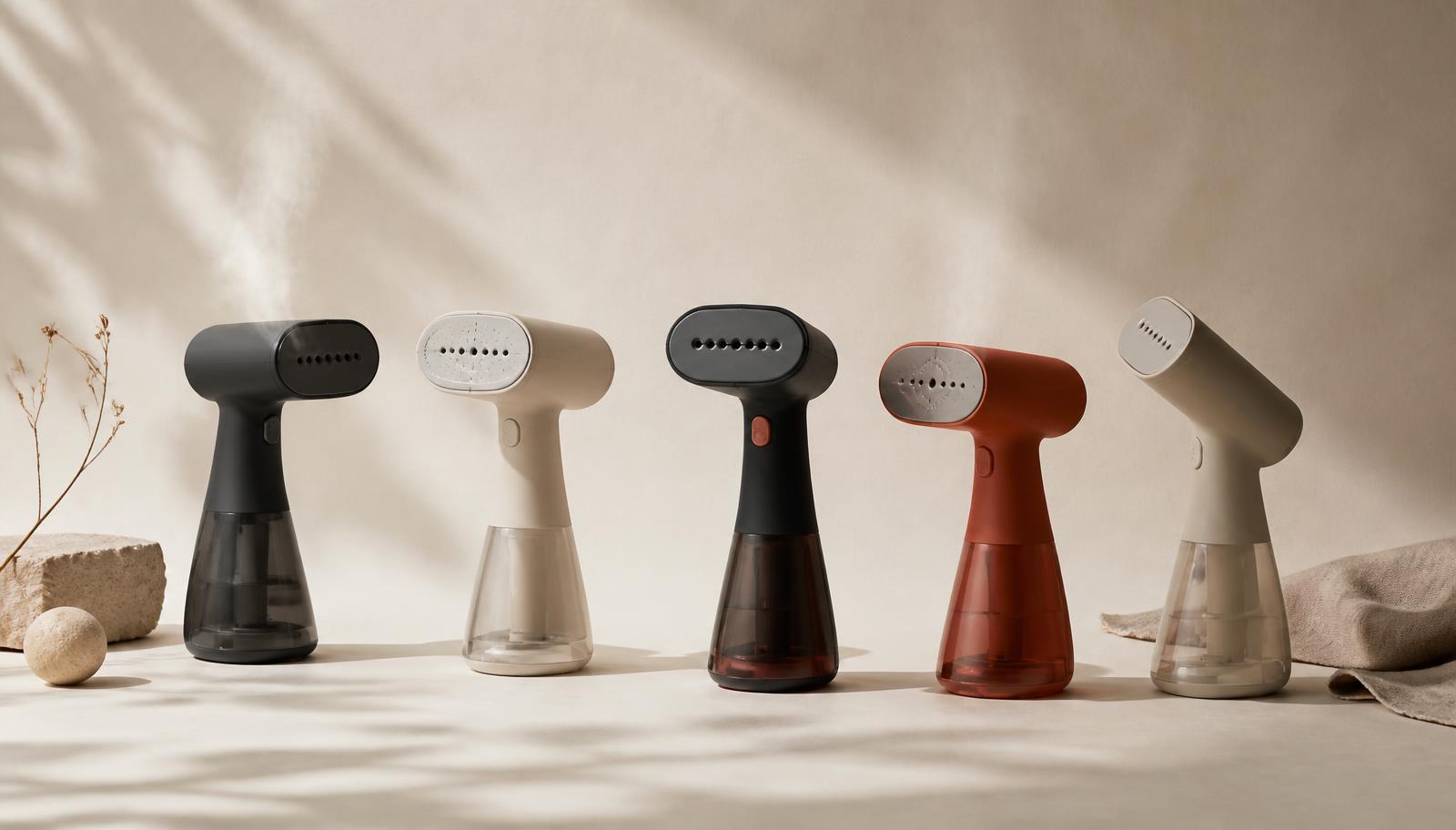
Dual-voltage steamers
Compare the best dual-voltage travel steamers for overseas trips. See voltage ranges, plug-adapter needs, heat-up times, weight, tank size, and safety caveats.
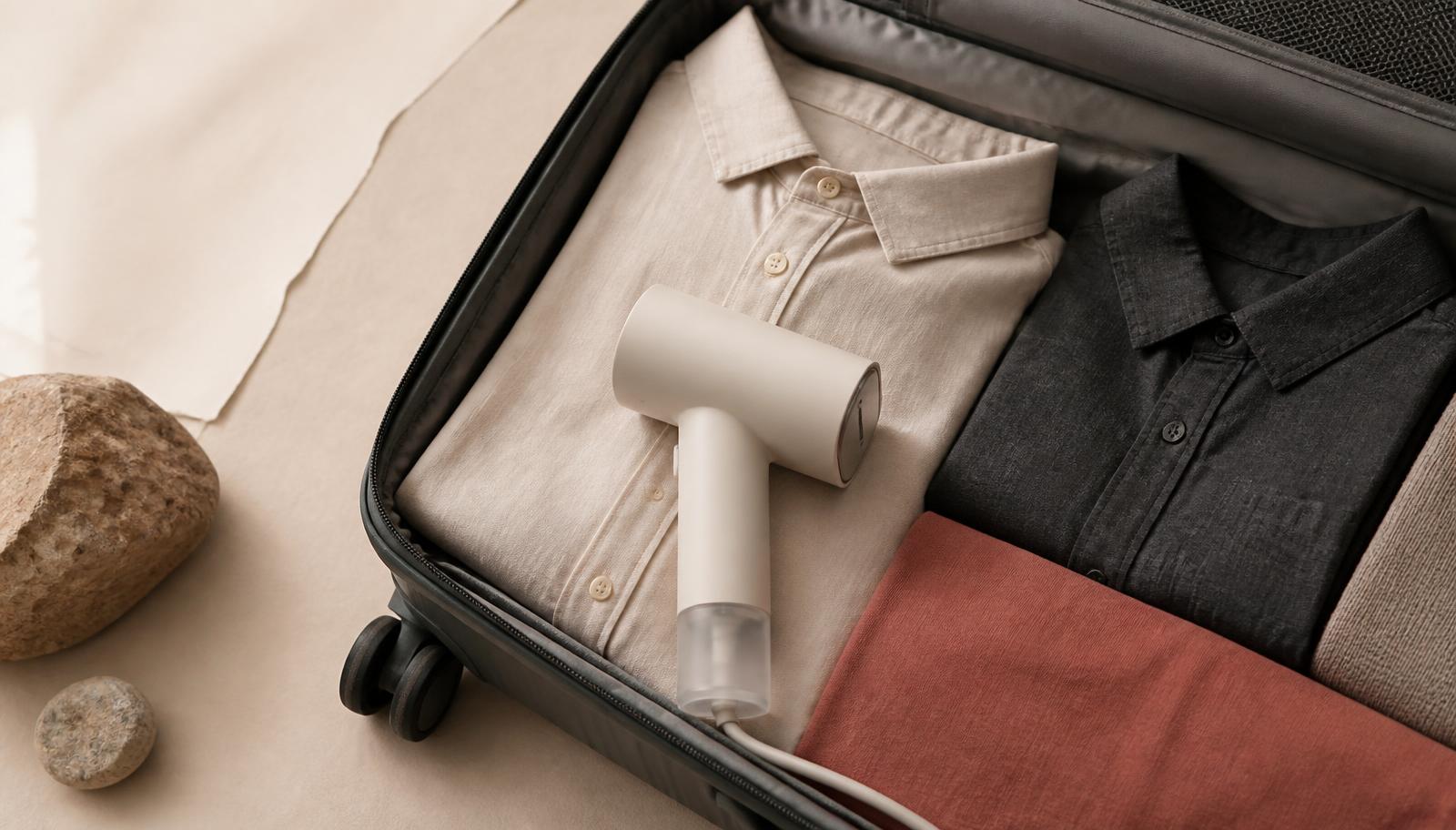
Portable steamers
Compare portable travel steamers by packed size, weight, foldability, cord, case, heat-up time, and hotel-room usability. See domestic and international caveats.
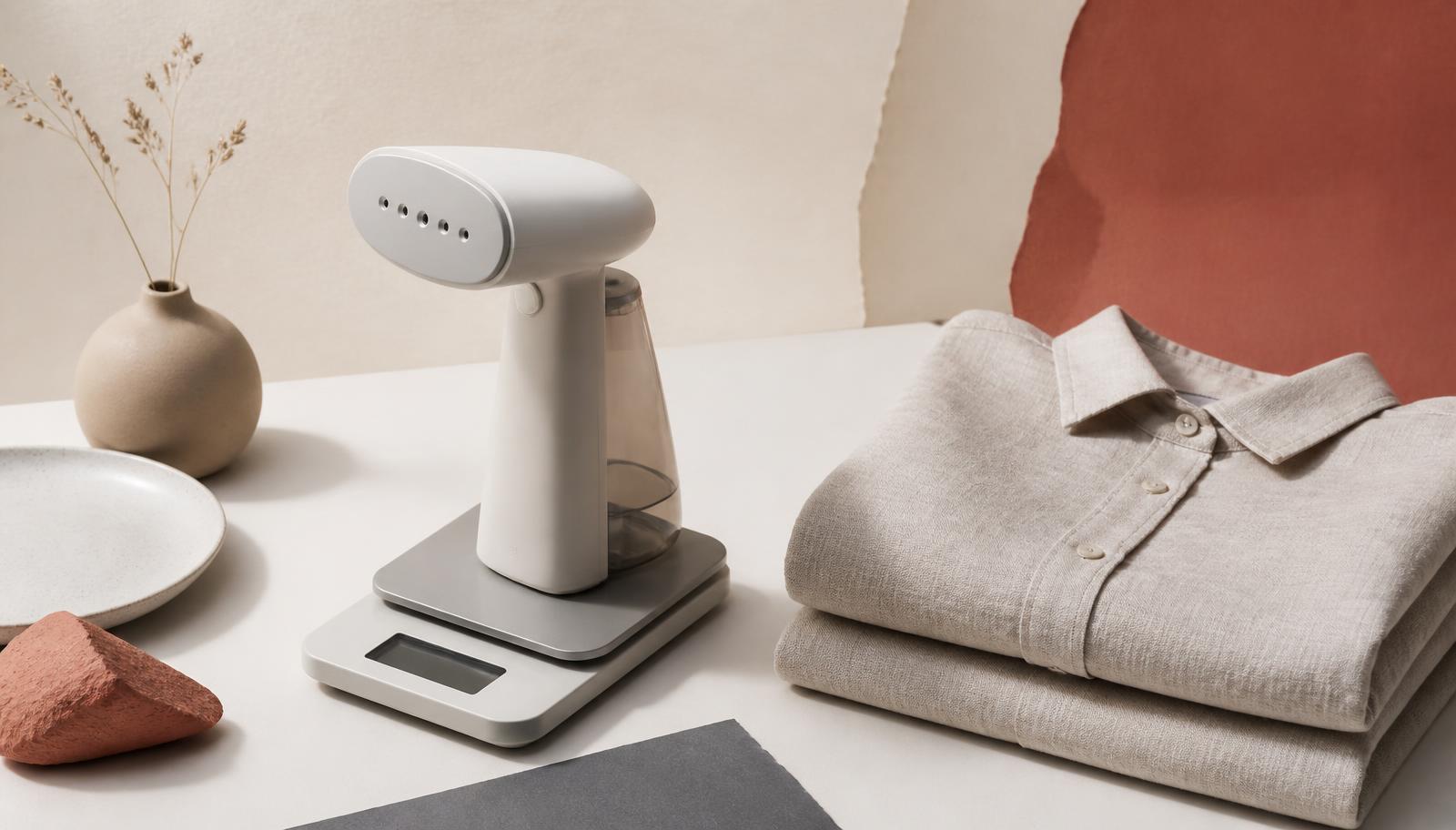
Lightweight steamers
Compare lightweight travel steamers by listed weight, packed dimensions, foldability, tank trade-offs, heat-up time, and voltage. Find a low-weight pick for your next trip.
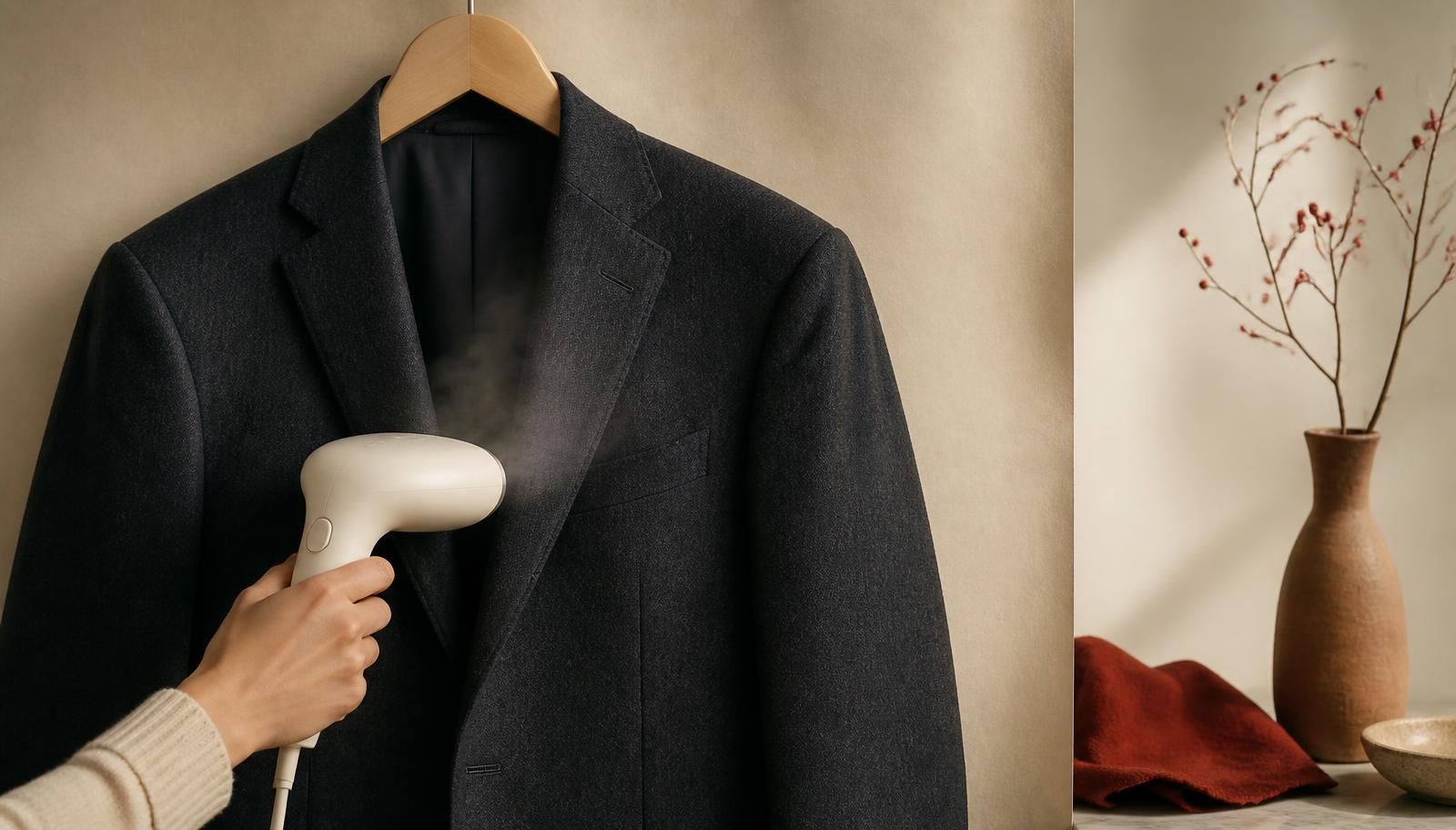
Steamers for suits
Find the best travel steamers for suits, compare voltage and control, and learn how to steam jacket panels, lapels, shoulders, and trousers safely.