Comparison · Steamer vs. iron
Travel Steamer vs. Iron: Which Is Better for Your Clothes?
Compare a travel steamer and iron for wrinkle removal, crisp finishes, delicate fabrics, hotel use, packing, voltage, and 2-in-1 convenience.
We may earn an Amazon commission from links on this page, at no extra cost to you. How this works.
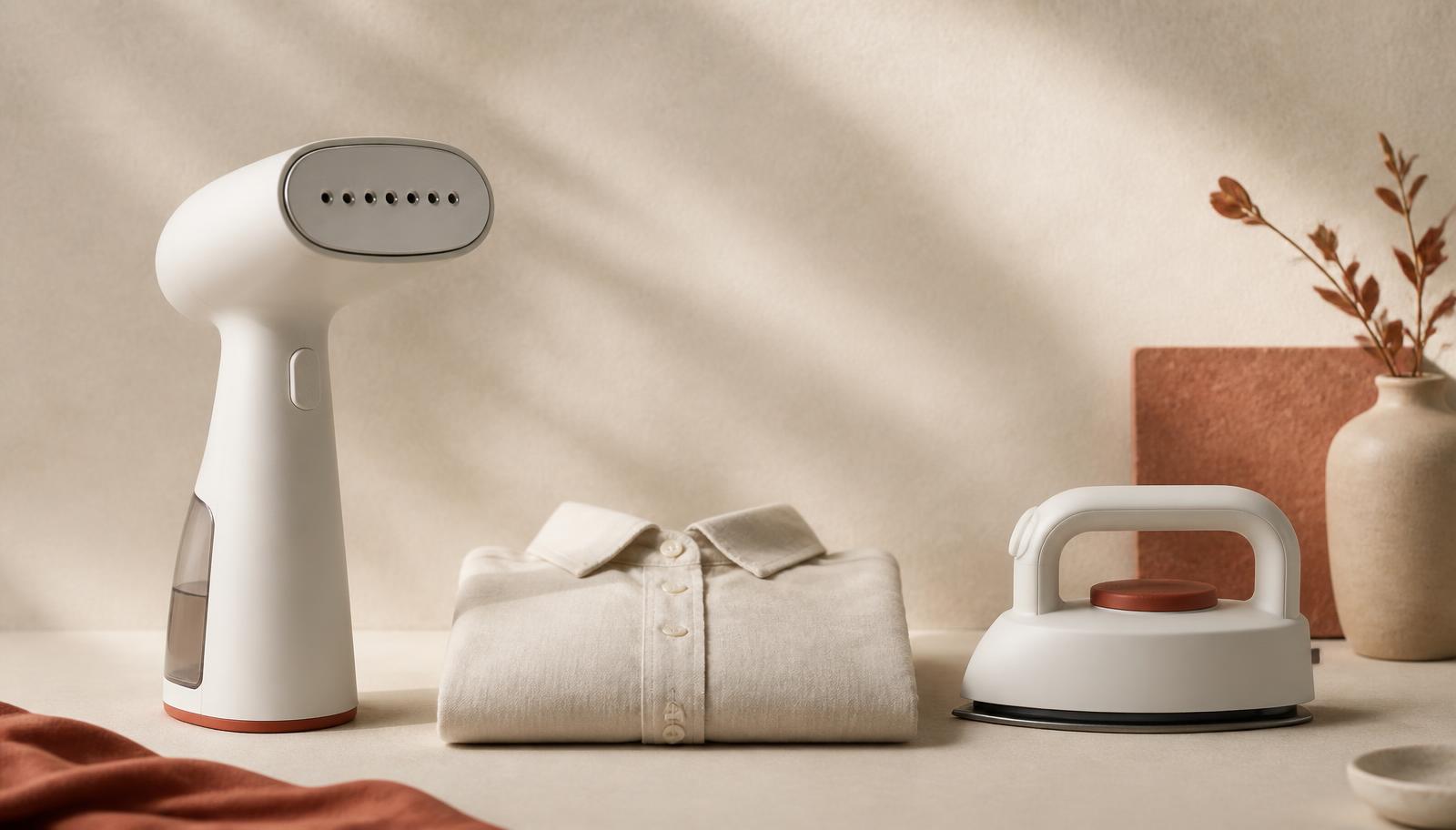
A travel steamer and a travel iron solve the same broad problem, but they do not create the same finish. A steamer is convenient for hanging garments and quick hotel-room touch-ups. An iron uses direct heat and pressure to create sharper collars, cuffs, pleats, and trouser creases.
Neither tool wins for every traveler. The better choice depends on the clothes you pack, the finish you want, the space available in your hotel room, the weight of the complete kit, and whether you will cross a voltage boundary.
Should you take a travel steamer or an iron?
Choose a travel steamer if you mostly need quick touch-ups on hanging garments, a smooth but relaxed finish, or a compact tool for hotel use. Choose an iron if you need crisp collars, cuffs, pleats, sharp trouser creases, or a pressed finish on cotton and linen. Choose a 2-in-1 model only if you want both functions and accept its format, weight, water capacity, and model-specific limits.
Before either tool touches a garment, check the care label. For international travel, also verify the exact appliance voltage, frequency, wattage, and plug requirements. A travel-sized product is not automatically dual voltage.
Quick comparison: travel steamer vs. travel iron
| If your priority is... | Choose... | Why |
|---|---|---|
| Hanging shirts and quick touch-ups | Handheld steamer | It works without an ironing board and suits a relaxed finish |
| Crisp collars and cuffs | Travel iron | Soleplate pressure creates a sharper finish |
| Sharp trouser creases or pleats | Travel iron | Direct contact provides more control |
| Delicates or textured garments | Steamer, if the care label permits | Less direct contact may suit the garment better |
| A small hotel room and one or two items | Handheld steamer | It usually needs less surface setup |
| A mixed wardrobe that needs both finishes | 2-in-1 device or both tools | It offers more control but may add weight and complexity |
| International travel | A model rated for the destination voltage | Plug shape and voltage require separate checks |
The short version: steamer for relaxed, iron for crisp
A handheld steamer directs hot steam toward the fabric while the garment hangs. Steam relaxes wrinkles, but the tool does not apply the same flat pressure as an iron. The result is usually smoother and more natural rather than sharply pressed.
An iron uses a heated soleplate, with steam on some models, to combine heat and pressure. That pressure helps flatten fabric and shape specific areas. Rowenta's comparison positions handheld steamers for hanging garments and quick touch-ups, while it positions irons for cotton shirts, linen, structured trousers, and garments that need a crisp finish.
That distinction matters when you are packing for a work trip. A steamer may make a jacket or blouse look presentable without a board. An iron is more useful when the collar, cuff, pleat, or crease is part of the look.
How a travel steamer removes wrinkles
A steamer sends hot steam into the fabric. The garment hangs while you guide the steam head over the wrinkled areas. This setup avoids the need for a flat surface and makes it natural to work on shirts, dresses, jackets, and other hanging items.
The main benefit is convenience. You can refresh one garment without unfolding an ironing board. A steamer can also be a practical choice when you prefer a soft, relaxed finish.
The limitation is pressure. Steam alone may relax wrinkles without creating a firm trouser crease, sharply folded pleat, or crisp collar edge. Thick fabric and set-in wrinkles may take more time or may need an iron for the finish you want.
How a travel iron removes wrinkles
An iron presses a heated soleplate against the fabric. Heat changes how the fibers respond, while pressure helps flatten and shape the garment. Steam irons add moisture to the process, but the soleplate still supplies the direct contact that creates a pressed finish.
That control helps with collars, cuffs, seams, hems, pleats, and trouser creases. It also creates more setup requirements. You need a stable, flat, heat-safe surface, the correct temperature, and enough room to move the iron without contacting bedding, plastic, wood, or other hotel surfaces.
Direct contact also means the wrong heat or pressure can cause problems. Follow the garment-care label and the iron manual rather than choosing a setting by guesswork.
Choose based on the finish you want
| Desired finish | Better fit | Reason |
|---|---|---|
| Smooth and natural | Steamer | It relaxes wrinkles without pressing the fabric flat |
| Crisp and sharp | Iron | Pressure helps flatten and shape the fabric |
| Defined trouser crease | Iron | The soleplate gives direct control over the crease |
| Fast garment refresh | Steamer | It works on a hanger without a full board setup |
| Pressed collar and cuffs | Iron | Direct contact reaches small structured areas |
| Gentle touch-up on a hanging jacket | Steamer, if permitted by the label | It can refresh larger panels without a board |
Do not promise that either tool removes every wrinkle. Fabric thickness, construction, lining, crease age, and care instructions affect the result.
Which tool is better for common travel garments?
Dress shirts and blouses
A steamer is convenient for light wrinkles across a hanging shirt. An iron is the better fit when the collar, cuffs, front placket, or hem needs a crisp edge. Decide whether you want the shirt to look smooth or pressed.
Suits and jackets
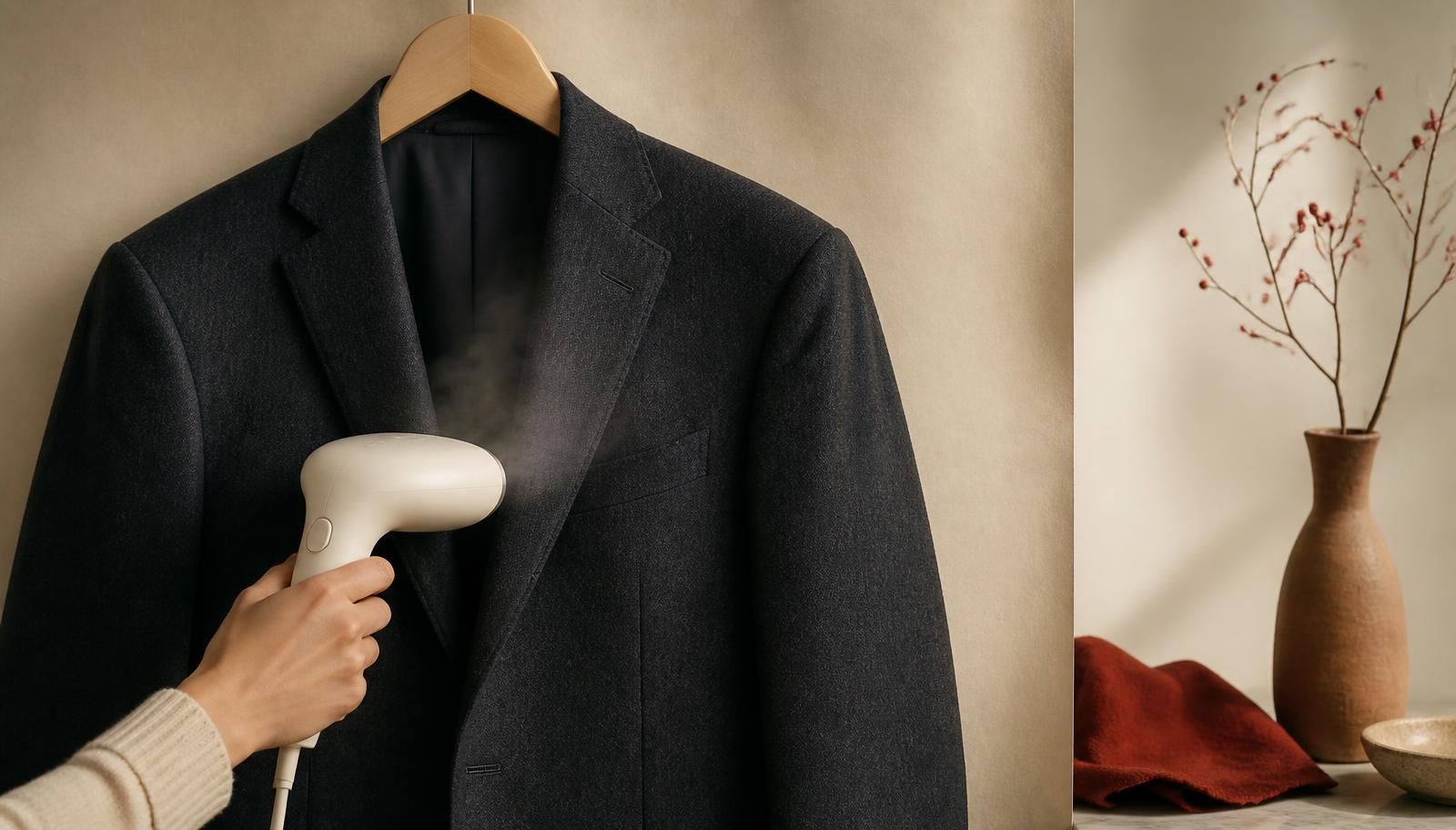
A steamer can refresh larger jacket panels while the garment hangs. An iron may help with specific areas, but only when the garment label and construction allow direct heat. Do not apply a hot soleplate to a jacket simply because an iron is available.
Trousers and skirts
An iron provides more control over trouser creases and structured pleats. A steamer can relax general wrinkling, but it may not recreate a defined crease.
Silk, satin, wool, and cashmere
Check the care label before choosing either tool. Rowenta positions steamers as useful for some delicate and textured materials, including silk, wool, cashmere, and embellished garments, because the tool does not rely on the same direct soleplate contact. That is a general comparison, not a guarantee for every fabric, lining, trim, or finish.
Polyester, knits, and synthetic blends
A steamer may suit a quick refresh, but fabric construction still matters. An iron can flatten or distort a knit when the setting or pressure is wrong. Do not use one temperature or contact method for every synthetic blend.
Which is easier to use in a hotel room?
A handheld steamer usually needs a hanger, a dry location, water, and a suitable outlet. It does not need an ironing board, so it can be convenient for a single item in a small room.
A travel iron needs a stable, flat, heat-safe surface. The hotel may provide an ironing board, but it may be stored in a closet or unavailable. Never improvise with a bed, towel, plastic surface, or unstable table.
For hotel-specific setup and safety, read how to use a travel steamer in a hotel room.
Which is faster for one garment?
For one shirt before dinner, a steamer may require less setup because the garment can stay on a hanger. For a suitcase full of cotton shirts, an iron may be more efficient because pressure handles large flat areas and defined edges. This is a use-case comparison, not a universal timed result.
Portability, weight, and packed space
Compare the complete kit, not only the appliance.
| Packing factor | Steamer | Travel iron |
|---|---|---|
| Surface needed | Usually a hanger and dry area | Flat, heat-safe surface |
| Water | Often uses a tank | May use a smaller tank or no steam function |
| Shape | Handheld body, sometimes foldable | Soleplate and handle can be rigid or folding |
| Packed risk | Protect the steam head and empty the tank | Protect the soleplate and allow it to cool fully |
| Best travel role | Quick touch-ups and hanging items | Pressed finish and structured garments |
Compare portable travel steamers and lightweight travel steamers if luggage space or carry weight is your main concern.
“Portable” describes how easy an item is to carry and use. “Lightweight” focuses on mass. A device can be small without being the lightest option, and a lightweight device may still need a case, adapter, or water container.
Voltage and international travel
A steamer and an iron face the same electrical question: is the exact model rated for the destination supply?
A plug adapter changes plug shape. It does not convert voltage. A 120V-only tool should not be connected to 220V or 240V power merely because the plug fits. For international use, look for a model-specific input range such as 110-240V and check the frequency and any voltage-selector instructions.
Read travel-steamer wattage and voltage explained and the best dual-voltage travel steamers before an international trip.
Rowenta's official page lists the Origin DR1050U1 as a 120V-240V model with 1100W. That specification applies to the named model. It does not establish that another Rowenta product, travel iron, or steamer has the same input range.
Fabric safety starts with the care label
The care label comes before the tool. The Federal Trade Commission says garment manufacturers and importers must provide care instructions and warnings with a reasonable basis. The eCFR requires warnings when a reasonably expected care procedure could harm the garment.
Use this process:
- Read the care label.
- Check whether the label permits ironing, steam, or a particular temperature.
- Follow the appliance manual.
- Use the lowest suitable setting when the label permits the treatment.
- Test an inconspicuous area only when the label and manual support that approach.
- Stop if the fabric shines, distorts, changes color, or shows water marks.
Avoid the blanket claim that steamers are always safer than irons. Less direct contact can reduce one type of risk, but steam, heat, water, and incorrect use can still damage fabric.
When a 2-in-1 steamer and iron makes sense
A 2-in-1 device can suit a traveler who wants hanging steaming and occasional pressing without packing two appliances. The trade-off is that the combined format may be longer, heavier, or less capable than a dedicated tool in either mode.
The NORI Press is a useful example of why model classification matters. NORI documents a 1.4 lb press with six fabric-specific heat settings, an 8-foot cord, and 120/220V at 60Hz. It is a press and steam iron, not a conventional lightweight handheld steamer. Confirm the current water-capacity information before publishing a number.
Epicka is another example of a global travel format. The manufacturer describes a 90-degree rotatable head, two modes, worldwide-voltage positioning, and a 15-second heat-up. The official page reviewed does not publish wattage, weight, or tank capacity. Do not fill those fields from another model.
What should you pack for your wardrobe?
| Your trip looks like... | Better starting point |
|---|---|
| Casual clothing and one or two touch-ups | Handheld steamer |
| Business shirts with crisp collars and cuffs | Travel iron |
| Formal trousers or pleated garments | Travel iron |
| Mixed fabrics and jackets | Steamer, unless a pressed finish is required |
| International travel with varied outlets | Confirmed dual-voltage tool |
| One device for both hanging and pressing | 2-in-1, after checking size, weight, water, and voltage |
A simple decision tree
Ask yourself five questions:
- Do you need a crisp finish? If yes, favor an iron.
- Will most items hang while you work? If yes, favor a steamer.
- Are you packing delicate, textured, or embellished pieces? Check the label, then consider a steamer if permitted.
- Will you travel internationally? Confirm voltage, frequency, plug type, and adapter requirements.
- Do you need both finishes? Compare a 2-in-1 with the weight and packed length of carrying both tools.
Common mistakes to avoid
- Assuming a steamer creates a pressed crease.
- Assuming an iron is safe for every fabric at a low setting.
- Using a hotel bed or towel as an ironing board.
- Ignoring the garment-care label.
- Treating “travel” as proof of dual voltage.
- Comparing a 2-in-1 press with a handheld steamer as though they have the same format.
- Transferring voltage, wattage, tank, or runtime data between model variants.
- Packing either tool while it is hot or wet.
Frequently asked questions
Can a steamer replace an iron for travel?
Sometimes. A steamer can replace an iron when you mainly need smooth hanging garments and a relaxed finish. It is less suitable when you need crisp collars, cuffs, pleats, or sharp trouser creases. Your wardrobe and the garment-care label should decide.
Is a steamer better than an iron for delicate clothes?
A steamer may reduce direct-contact risk, but it is not automatically safe for every delicate fabric. Follow the garment label and steamer manual, and stop if the fabric changes.
Is an iron better than a steamer for a suit?
It depends on the finish and the garment instructions. A steamer can refresh a hanging jacket. An iron gives more direct control for crisp areas, but direct heat can damage some fabrics or constructions.
Which is easier to use in a hotel room?
A handheld steamer usually needs less surface setup because it works on a hanger. An iron needs a stable, flat, heat-safe surface. Hotel rules and available equipment still matter.
Are travel steamers and travel irons dual voltage?
Some are and some are not. Check the exact model's input label and manual. A plug adapter does not convert voltage.
Do steamers remove wrinkles better than irons?
Neither is better for every wrinkle. Steamers suit hanging touch-ups and relaxed finishes. Irons use pressure to create sharper results on suitable garments.
Should I buy a 2-in-1 travel steamer iron?
Consider one if you need both hanging steaming and occasional pressing but want one device. Check its weight, length, tank, voltage, frequency, and how each mode works. A combined device still involves trade-offs.
Final recommendation
Choose the tool that matches the finish you actually wear. A handheld steamer is the practical starting point for quick hotel touch-ups, hanging garments, and many casual or delicate items when the label permits steaming. A travel iron is the better fit for crisp collars, cuffs, pleats, and defined creases. A 2-in-1 belongs in the middle when you need both functions and accept the added format trade-offs.
References
Keep reading
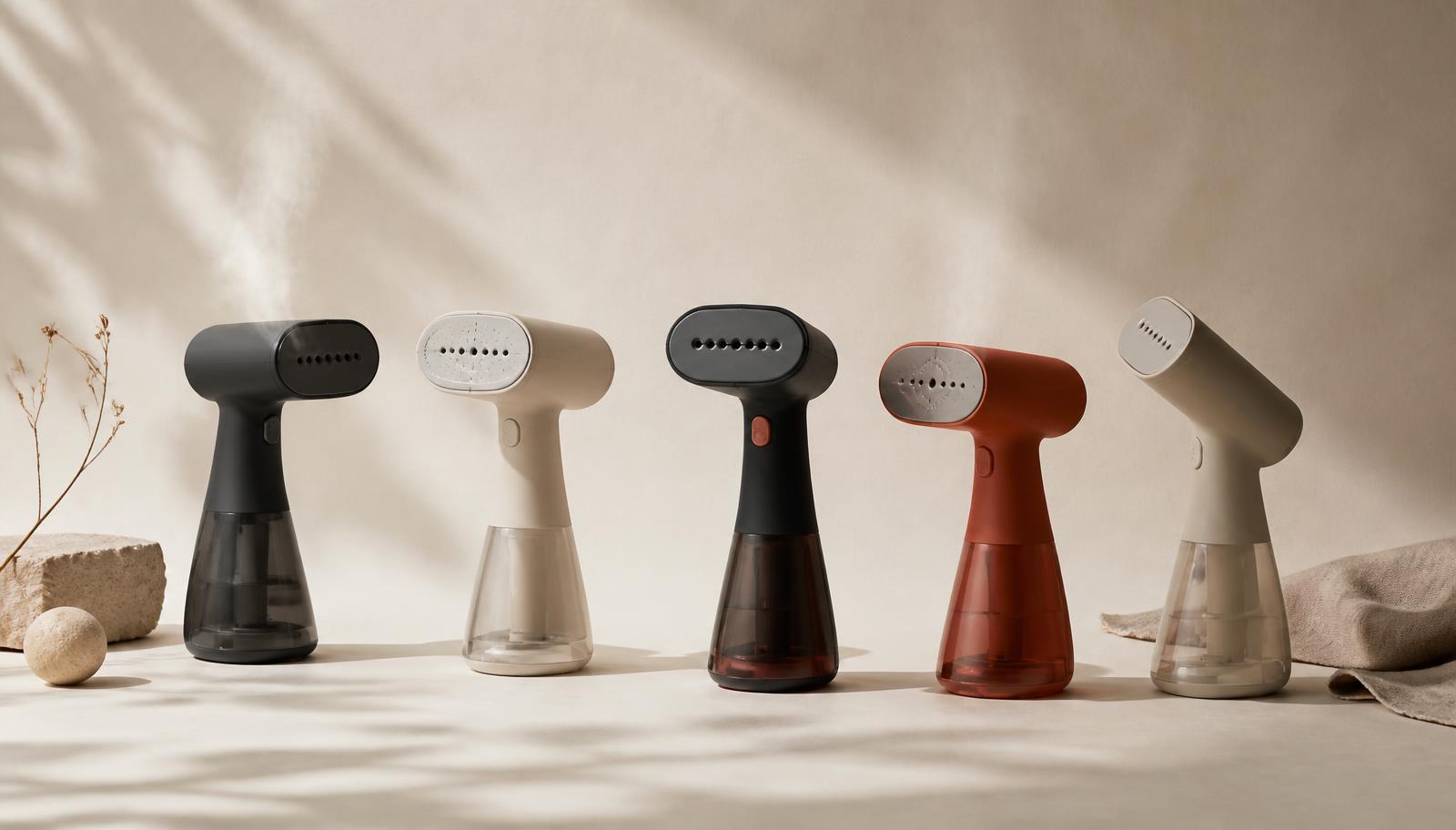
Dual-voltage steamers
Compare the best dual-voltage travel steamers for overseas trips. See voltage ranges, plug-adapter needs, heat-up times, weight, tank size, and safety caveats.
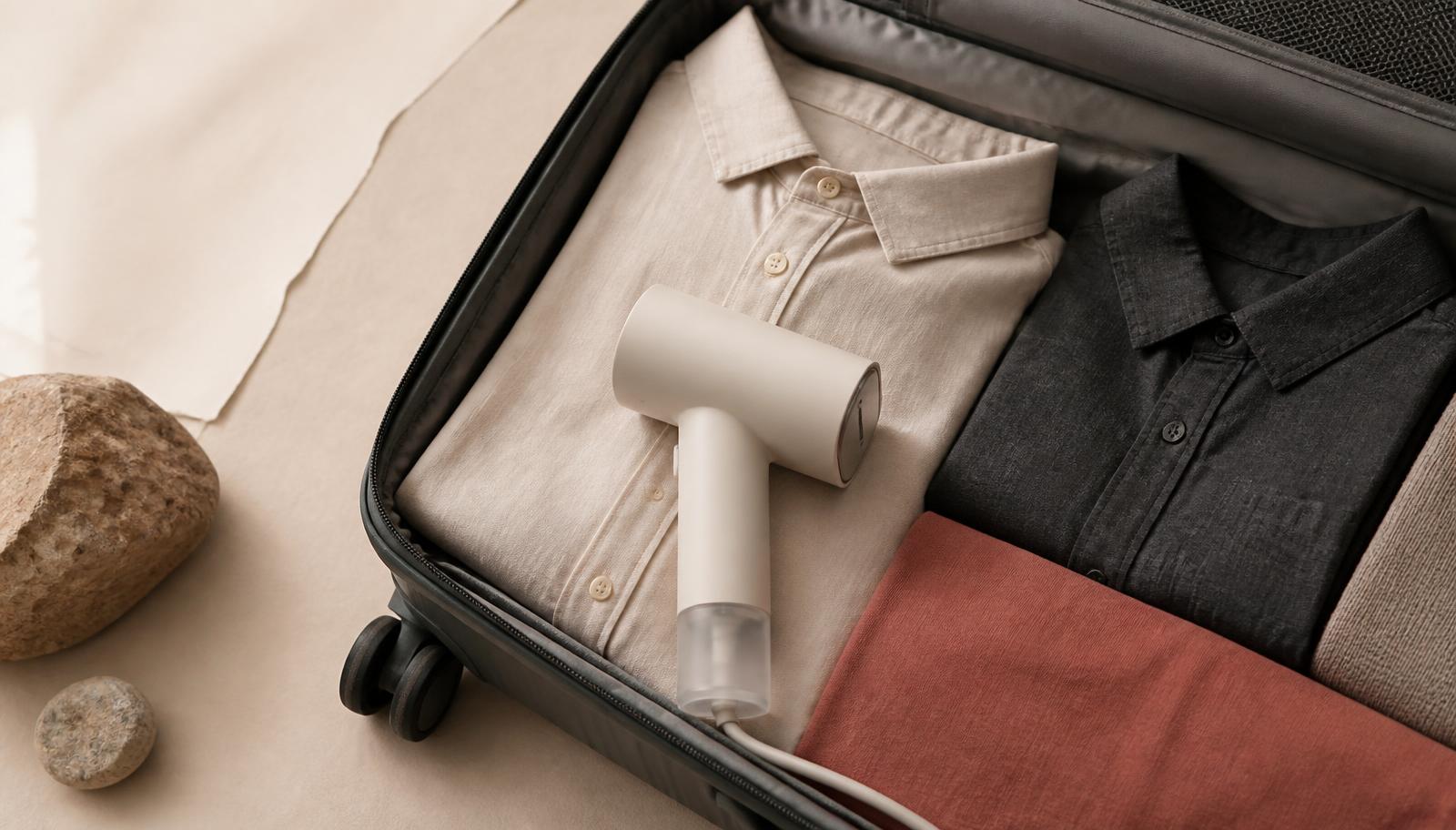
Portable steamers
Compare portable travel steamers by packed size, weight, foldability, cord, case, heat-up time, and hotel-room usability. See domestic and international caveats.
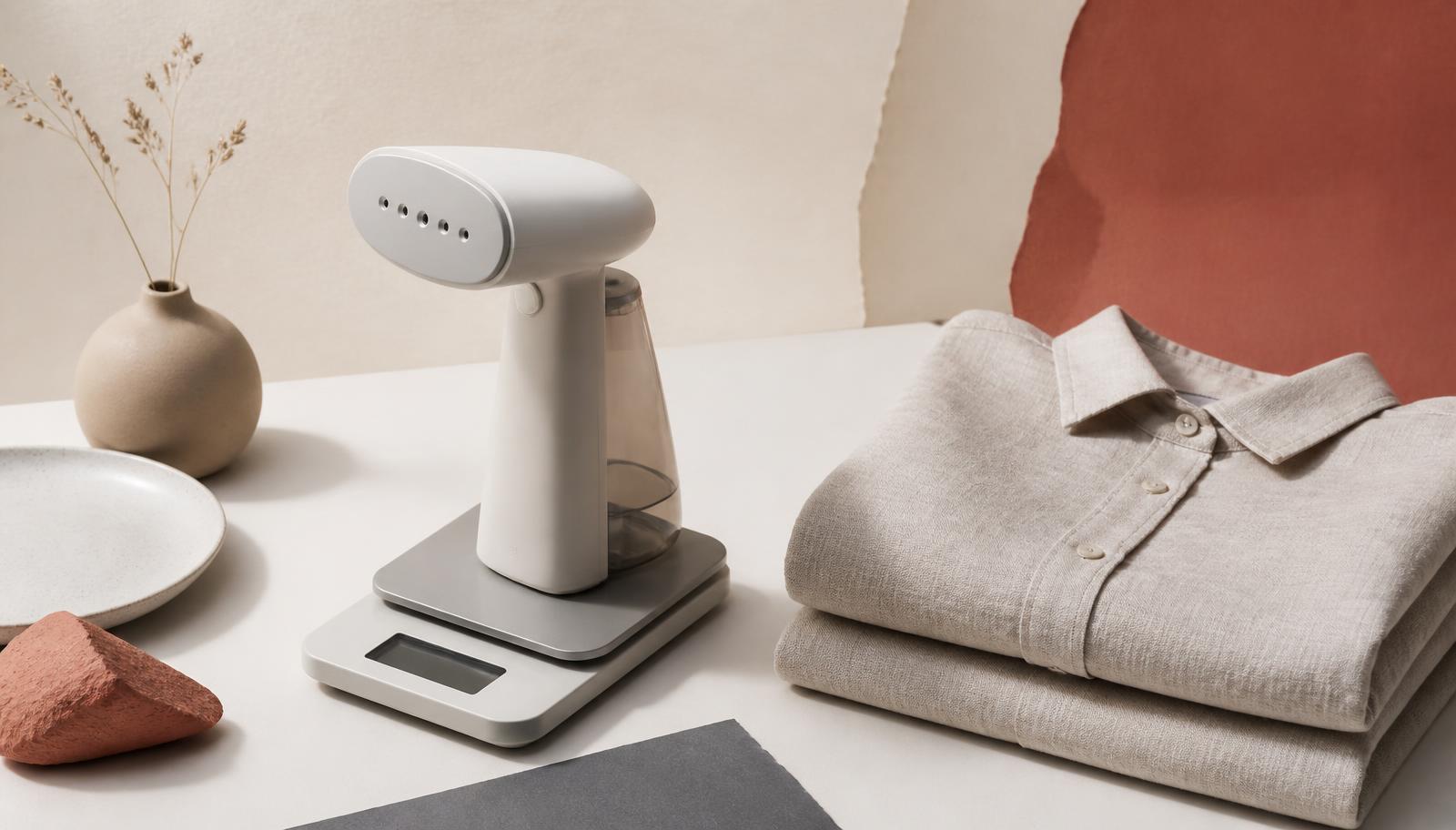
Lightweight steamers
Compare lightweight travel steamers by listed weight, packed dimensions, foldability, tank trade-offs, heat-up time, and voltage. Find a low-weight pick for your next trip.
Steamers for suits
Find the best travel steamers for suits, compare voltage and control, and learn how to steam jacket panels, lapels, shoulders, and trousers safely.